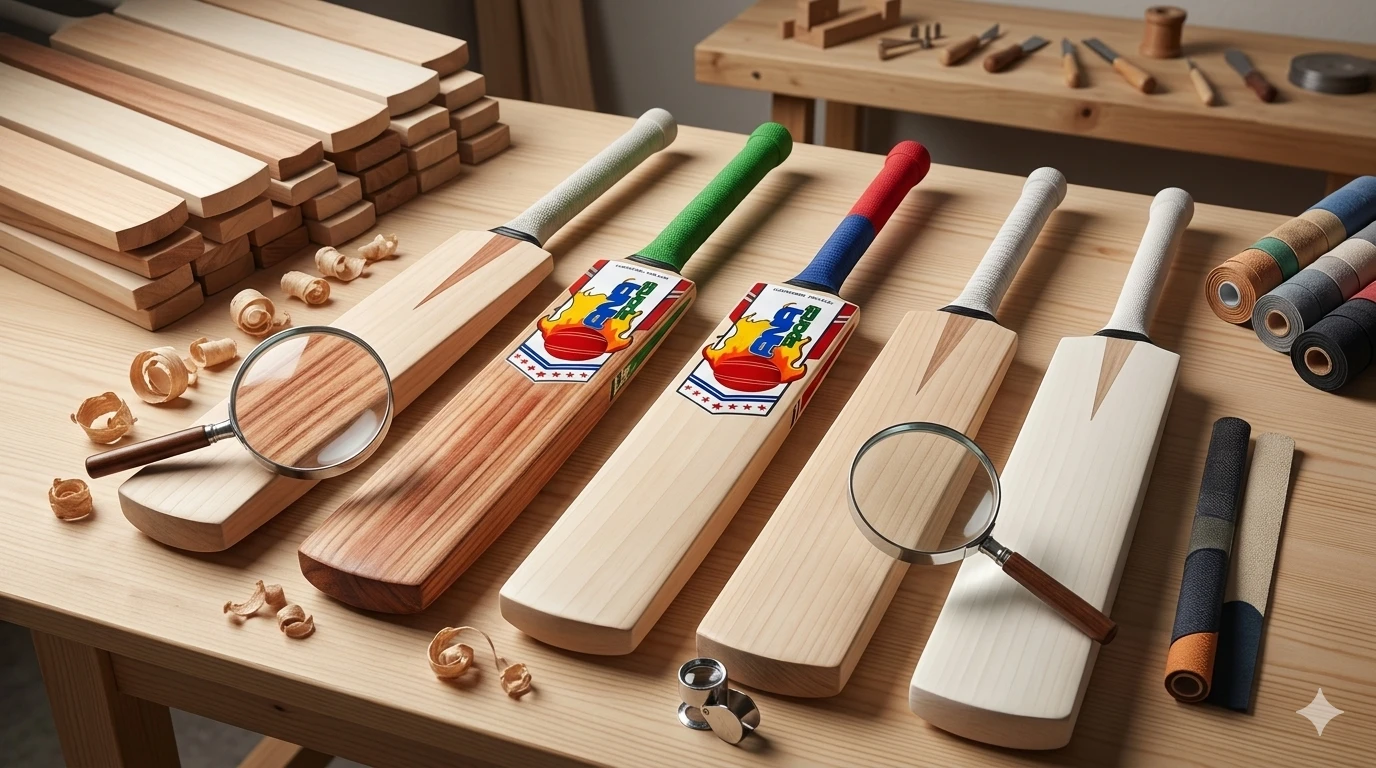
How to Identify an Original Kashmir Willow Cricket Bat
How to Identify an Original Kashmir Willow Cricket Bat
With mislabelled and counterfeit cricket bats flooding online marketplaces and local shops, knowing how to spot a genuine Kashmir willow bat has become a practical skill every buyer needs. Whether you're picking up your first bat or replacing a worn-out blade for the academy season, the wrong purchase can mean poor performance, early cracking, and wasted money.
If you're still comparing different bat categories before choosing a Kashmir willow model, our ultimate guide to cricket bats in India explains the major bat types, player profiles, and buying considerations.
Kashmir willow is a respected willow species native to the Kashmir Valley, widely used across India and Pakistan for affordable, durable cricket bats. The wood performs well at every level from school cricket to club play , but only when you're buying the real thing.
Understanding the different types of cricket bats can also help you determine whether a Kashmir willow bat matches your playing level and budget.
In this guide, you'll learn exactly what to look for: grain structure, wood colour, weight range, how the bat sounds when knocked, and how to read labels and branding correctly. ANA Sports sources bats directly from Kashmir manufacturers, so every piece of guidance here is grounded in real product knowledge, not guesswork.
Table of Contents
|
1. |
What Is Kashmir Willow? |
| 2. |
Check the Grain Count |
| 3. |
Wood Colour and Surface Texture |
| 4. |
Weight Check |
| 5. |
The Knocking Test |
| 6. |
Label, Sticker and Branding Verification |
| 7. |
Kashmir Willow Grade Comparison Table |
| 8. |
Buy From Trusted Sources |
| 9. |
Common Mistakes When Buying Kashmir Willow Bats |
| 10. |
FAQ |
What Is Kashmir Willow?
Kashmir willow (scientific name: Salix alba var. caerulea, the same species family as English willow) is grown primarily in the Anantnag district of Jammu & Kashmir, India. The wood has a denser grain structure than English willow, which makes it heavier per unit volume , but also more resistant to cracking from misuse or lack of oiling.
If you're deciding between both willow varieties, read our detailed comparison of English willow vs Kashmir willow to understand the performance differences.
Genuine Kashmir willow bats are used by millions of players across South Asia. They offer excellent value for money and hold up well under regular net practice and match conditions. The issue isn't with the wood itself , it's with fakes made from poplar, deodar, or other inferior timber that gets passed off as Kashmir willow, often with convincing stickers attached.
A real Kashmir willow bat will give you honest performance. A fake one will let you down from the first session.
The overall performance of any bat also depends heavily on timber quality, which is why understanding why wood quality matters in a cricket bat is essential before making a purchase.
1. Check the Grain Count
Quick Answer: Genuine Kashmir willow bats have visible vertical grain lines running up the face of the blade. Grade 1 bats typically show 6–8 straight, evenly spaced grains. Fewer or irregular grains indicate a lower grade or a different wood species entirely.
What Are Grains?
Grains are the growth rings of the willow tree, visible as vertical lines running from the toe to the shoulder of the bat face. Each line represents one year of tree growth. In a quality Kashmir willow bat, these lines should run straight and parallel , not diagonal, wavy, or erratic.
If you're unfamiliar with cricket bat grading, our guide on cricket bat grades explained breaks down how grain count and appearance influence quality.
How to Count Grains
Place a ruler at the base of the bat blade, across the full width of the face. Count the number of grain lines you can see running vertically within that width.
-
Grade 1 Kashmir Willow: 6–8 straight, evenly spaced grains
-
Grade 2 Kashmir Willow: 4–6 grains, minor irregularities acceptable
-
Grade 3 Kashmir Willow: Fewer than 4 grains, wider spacing, some waviness
Learning how grain patterns affect performance can help you assess a bat more accurately than relying on stickers or marketing claims alone.
What Irregular Grains Tell You
If the grain lines run diagonally, curve sharply, or disappear entirely in certain areas, the bat is either a very low grade or made from a different timber species. Poplar and deodar , two common substitutes , may show grain-like markings, but they rarely run straight and typically look patchy under close inspection.
IMAGE PLACEHOLDER: Close-up photograph of a bat face showing 6 clearly visible, straight vertical grain lines , Grade 1 Kashmir willow example.
2. Wood Colour and Surface Texture
The colour and texture of the bat face are some of the easiest things to assess without any tools.
What Genuine Kashmir Willow Looks Like
Authentic Kashmir willow has a cream to pale straw colour, sometimes with faint light brown streaks running along the grain lines. This colouring is natural and indicates properly seasoned, untreated willow. Under shop lighting, it often appears slightly off-white with a warm tint.
Manufacturers place significant emphasis on timber selection and preparation, which is why professional brands follow strict quality-control processes similar to those outlined in our guide on how ANA Sports ensures cricket bat quality
Warning Signs to Watch For
-
Overly white or bleached appearance: Some manufacturers bleach cheaper wood or poplar to make it look like willow. The result is an unnaturally bright white surface with no depth or grain variation.
-
Dark brown or reddish-brown colour: A deeply brown bat face typically suggests a different wood species altogether, or a bat that has been varnished heavily to obscure the grain.
-
Heavily painted face: If the bat face has been painted (rather than lightly oiled), it often means the manufacturer is hiding knots, cracks, or poor grain structure beneath. Run a fingernail lightly across the toe , paint will feel smooth and plasticky; genuine willow will feel slightly fibrous.
Surface Texture
A genuine Kashmir willow bat will feel slightly rough or fibrous on the face, especially near the toe. Light natural roughness is completely normal and indicates unfinished willow fibre. An excessively smooth face often means the blade has been heavily sanded to flatten out visual imperfections , a red flag on any bat claiming to be Grade 1 or Grade 2.
Small knots are acceptable in Grade 2 and Grade 3 bats but should not appear on Grade 1 bats.
3. Weight Check
What Is the Normal Bat Weight Range?
Genuine Kashmir willow bats for adult players typically weigh between 1,100g and 1,280g, with most club and match bats sitting around 1,150g–1,230g. Junior and short-handle bats will naturally fall below this range.
Players comparing handle lengths can also review our guide on long handle vs short handle cricket bats before making a purchase.
A bat that feels unusually light for its size is worth examining closely.
Choosing the correct bat dimensions is just as important as weight. Refer to our cricket bat sizes chart to ensure you're using the right size for your height and age group.
What Abnormal Weight Can Indicate
-
Too light: The blade may be made from a hollow-filled wood, lightweight deodar, or a species with lower fibre density than willow. Some manufacturers compress or treat inferior timber to look like willow, but the weight gives it away immediately.
-
Too heavy: Excessive weight can indicate green (unseasoned) wood that has not been properly dried. Green bats are prone to cracking and won't perform as expected.
How to Check bat Weight at Home
If you've ordered online and want to verify the bat, place it on a kitchen scale. Compare the reading against the manufacturer's listed specifications. A reputable seller will always state the bat weight on the product page. If weight is not listed at all, treat that as a minor concern worth following up on.
Note: A Grade 1 Kashmir willow bat can sometimes be lighter than a Grade 3 bat of the same profile. This is because tighter, denser grain fibre can pack more structural integrity into less mass. Weight alone is not a definitive test , it works best alongside the other checks in this guide.
4. The Knocking Test
The knocking test is one of the most reliable ways to assess the quality of a cricket bat's wood, and it requires no specialist equipment.
Proper preparation after purchase is equally important. Learn the correct process in our complete guide to knocking in a cricket bat
How to Perform the Knocking Test
Hold the bat vertically with the toe facing down. Use a bat mallet (or the back edge of another bat) and tap the face of the blade firmly in several places: the middle, near the toe, and near the shoulders.
Alternatively, hold the bat horizontally and tap the face with two knuckles , a simple but effective method used at many cricket shops across India.
What the Sound Tells You
-
Genuine Kashmir willow: Produces a solid, consistent 'thud' with a slight resonance. The sound is even across the face and has a depth to it , not flat or thin.
-
Inferior wood or fakes: Often produces a hollow 'thock' sound, or an excessively sharp 'crack' that rings out and fades quickly. These sounds suggest either air pockets in the wood, poor fibre density, or filler material used inside the blade.
The sound and feel of a bat are often influenced by where the sweet spot sits on the blade. Understanding the sweet spot of a cricket bat can help you evaluate performance more effectively.
Edge Test
Press the flat of your thumb firmly against the edge of the bat, just below the shoulder. The edge on a genuine Kashmir willow bat should feel firm and springy. A spongy or soft edge that yields too easily to pressure may indicate waterlogged or poorly seasoned wood.
IMAGE PLACEHOLDER: Demonstration of knocking test , hand holding bat mallet against centre of bat face.
5. Label, Sticker and Branding Verification
Branding alone should never be your only verification method, but it does offer useful clues, particularly for bats sold under established Indian cricket brands.
A bat's handle construction can also reveal clues about its overall quality and intended playing style. Explore the various types of cricket bat handles to understand their impact on feel and shock absorption.
What to Check on the Sticker
Reputable Indian cricket brands (TON, SG, BDM, SS, and others) use official stickers with security features including:
-
Holographic elements: A hologram sticker that shifts colour or pattern at different angles
-
QR codes: Some brands now include scannable QR codes that link to product authentication pages
-
Clear, sharp printing: Genuine stickers are professionally printed with crisp text, consistent colour, and properly aligned logos
Red Flags in Labelling
-
Misspelled brand names (e.g., "TONN", "S.G.", "BDMM")
-
Blurry or pixelated printing on the sticker
-
Missing country of origin or wood species declaration
-
Stickers that peel easily or look loosely applied
-
No Grade marking anywhere on the bat or packaging
A Note on Unbranded Bats
An absence of branding does not automatically mean a bat is fake or poor quality. Many small Kashmir manufacturers produce unbranded bats that are sold through local shops, cricket academies, and trusted online retailers. These can be excellent quality , the lack of a brand label simply means a smaller manufacturer made it. What matters is grade labelling, source transparency, and seller reputation.
6. Kashmir Willow Grade Comparison Table
|
Feature |
Grade 1 |
Grade 2 |
Grade 3 |
|---|---|---|---|
|
Grain Count |
6–8 straight grains |
4–6 grains |
Fewer than 4 grains |
|
Grain Consistency |
Perfectly straight |
Minor waviness acceptable |
Noticeable irregularities |
|
Wood Colour |
Cream to pale straw |
Pale straw, minor variation |
Deeper colouring acceptable |
|
Knots |
None |
Small knots acceptable |
Knots and blemishes present |
|
Surface Finish |
Light, minimal sanding |
Moderate finish |
Heavier finish likely |
|
Typical Weight (Adult) |
1,100g–1,200g |
1,150g–1,240g |
1,180g–1,280g |
|
Performance Level |
Club and match play |
Practice and casual matches |
School and beginner use |
|
Price Range (Approx.) |
₹1,500–₹3,500+ |
₹800–₹1,800 |
₹400–₹900 |
Prices are approximate and vary by brand, profile, and seller. Always verify grade labelling at point of purchase.
7. Buy From Trusted Sources
Even with all the knowledge above, the simplest and most reliable way to avoid fake Kashmir willow bats is to buy from sellers who are transparent about their sourcing.
What Legitimate Sellers Do Differently
-
Clearly label grade (Grade 1, Grade 2, Grade 3) on every product
-
Provide actual weight or weight range in the product description
-
Show clear product photographs , not stock images , of the actual bat face, sticker, and profile
-
Offer a return policy with clear terms
-
Are willing to answer questions about wood origin and grade
Reputable retailers should also provide transparent product specifications and detailed photographs so buyers can assess quality before ordering.
The Risk of Unverified Marketplaces
Online marketplaces with thousands of sellers make verification difficult. A convincing product photograph, a reputable brand logo, and a low price are all easy to fake. Without transparency about sourcing and grading, you're buying on trust alone.
ANA Sports sources Kashmir willow bats directly from Kashmir manufacturers. Every bat on the site is grade-labelled, weight-specified, and accompanied by product images of the actual item. Browse our range of Grade 1 Kashmir willow bats to compare options with full transparency.
You can explore our complete cricket bat collection or browse the latest products available through the ANA Sports store
8. Common Mistakes When Buying Kashmir Willow Bats
Understanding what to look for is important. But it's equally useful to know the mistakes that most players , especially beginners , make when buying:
Choosing by price alone. The cheapest bat isn't always the worst, but an unusually low price for a claimed Grade 1 bat should prompt closer inspection.
Trusting brand stickers without checking the wood. A genuine SG or TON sticker can be placed on substandard wood. The sticker verifies the brand on the bat , it doesn't verify the grade of the willow beneath it.
Not checking weight. Most buyers pick up a bat, feel the balance, and put it back without ever checking the actual weight. A few seconds on a scale reveals a lot.
Buying online without grade confirmation. If a product listing says "Kashmir willow" but doesn't specify a grade, ask before you buy. A seller who can't or won't confirm the grade should be treated with caution.
Assuming all Kashmir willow is the same. Grade 3 Kashmir willow is a very different product from Grade 1. Both are genuine Kashmir willow , but they perform quite differently and are suited to very different players and purposes.
Many first-time buyers also make the mistake of choosing a bat designed for a different format of cricket. Understanding the difference between a leather cricket bat and a tennis cricket bat can prevent an expensive buying error.
Conclusion
Spotting a genuine Kashmir willow bat comes down to five practical checks: grain count and straightness, wood colour and surface texture, weight against manufacturer specifications, the sound produced when knocked, and label and branding verification. No single check tells the whole story , but all five together give you a very clear picture.
Grade 1 Kashmir willow is a legitimate, high-performing choice for club cricketers, academy players, and anyone who wants a durable bat at an accessible price. The key is buying from sellers who are transparent about what they're selling.
If you're unsure where to start, explore ANA Sports' full range of grade-labelled Kashmir willow bats, sourced directly from Kashmir manufacturers , or read our Kashmir Willow Bat Grains Explained guide for a deeper look at how grading works.
External Authority Sources
FAQ
Q: How can I tell if a Kashmir willow bat is real?
Check for straight vertical grain lines running up the face, a cream to pale straw wood colour, firm edges, and a solid thud when knocked. Verify that grade and wood origin are clearly labelled. Buying from a trusted, direct-source retailer removes much of the guesswork.
Q: What is the grain count of Grade 1 Kashmir willow?
A Grade 1 Kashmir willow bat typically has 6 to 8 straight, evenly spaced grains visible on the blade face when measured across the full width at the base. Grains should run parallel from toe to shoulder without waviness or diagonal drift.
Q: What does an original Kashmir willow bat look like?
An original Kashmir willow bat has a cream to pale straw face with faint brown grain streaks, a slightly rough fibrous surface texture, and clearly visible straight grain lines. The face should not appear overly white (bleached) or heavily painted.
Q: How do I check Kashmir willow bat quality at home?
Knock the face with a bat mallet or your knuckles and listen for a solid thud , not a hollow or sharp crack. Weigh the bat against the manufacturer's listed weight. Examine the grain lines for straightness and count them at the base. Press the edges to check for firmness.
Q: Can a Kashmir willow bat be as good as English willow?
At the entry and intermediate level, a good Grade 1 Kashmir willow bat performs very well for net practice and club matches. English willow is lighter for equivalent performance and responds better at elite levels, but the difference is not meaningful for most amateur and school cricketers. Performance improvements vary between players and depend on skill level and playing conditions.
Q: What weight should a Kashmir willow bat be?
Most adult Kashmir willow bats weigh between 1,100g and 1,280g. Bats significantly outside this range , especially unusually light ones , are worth examining for wood quality. Junior bats will naturally be lighter based on their shorter length.
Q: Is an unbranded Kashmir willow bat fake?
Not necessarily. Many small Kashmir manufacturers produce high-quality unbranded bats. The absence of a brand sticker does not indicate fake wood. What matters is clear grade labelling, seller transparency, and a verifiable source.
Q: Which grade of Kashmir willow is best for match play?
Grade 1 Kashmir willow is best suited to match play and regular competitive cricket. Grade 2 is a solid choice for regular practice and occasional matches. Grade 3 is more appropriate for beginners, school players, and hard net use where bat wear is expected.
Q: Why does my Kashmir willow bat have a hollow sound?
A hollow sound when knocked typically suggests lower-density wood, an air pocket in the blade, or poor-quality timber. Genuine Kashmir willow of Grade 1 or Grade 2 quality should produce a solid, resonant thud. If your new bat sounds hollow, consult the seller about an exchange.
Q: How long does a Kashmir willow bat last?
With proper oiling, regular knocking-in, and sensible use, a Grade 1 Kashmir willow bat can last two to three playing seasons for a regular club player. Grade 3 bats under heavy net use may last one season or less. Durability depends on maintenance, playing surfaces, and usage frequency.





Related Blog
English Willow vs Kashmir Willow Cricket Bat: Which One Should You Actually Buy?
Nov 13, 2025 by Admin
ANA Sports