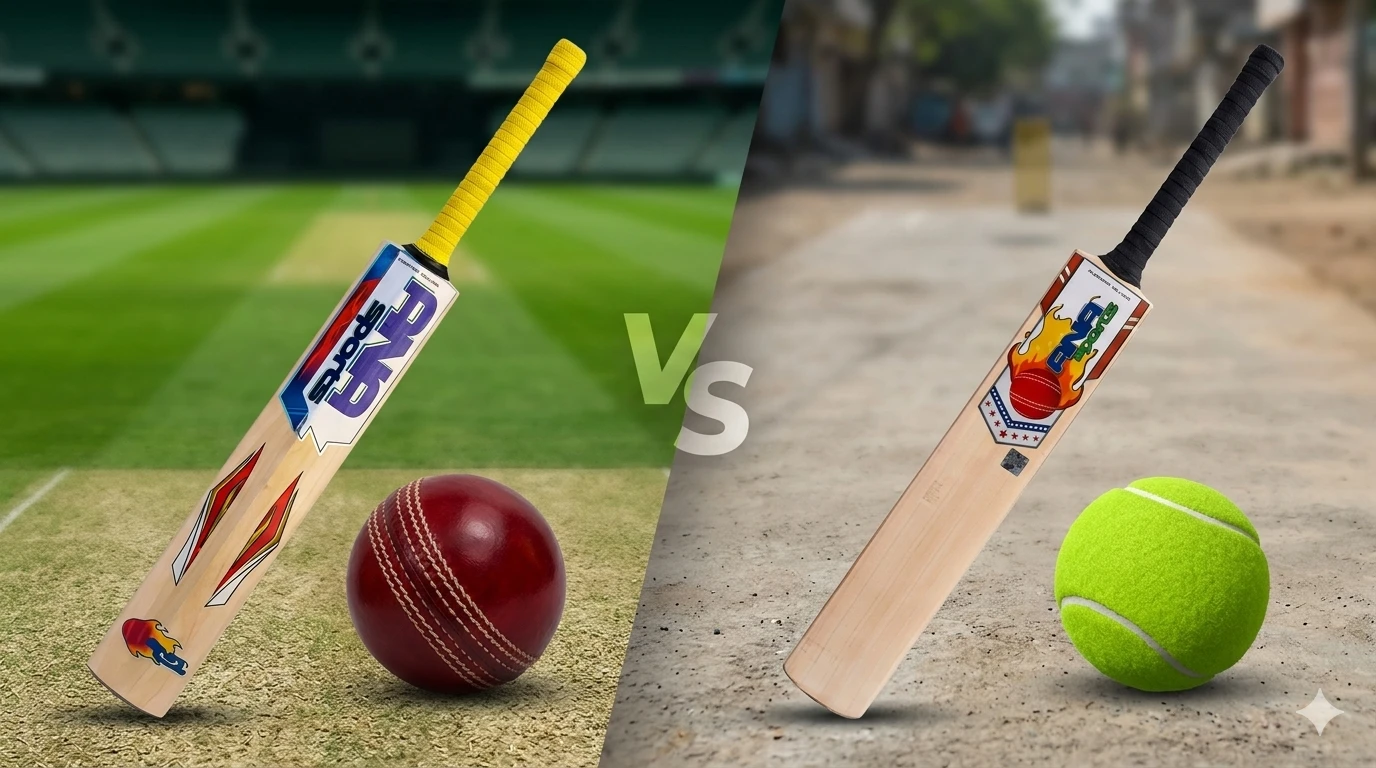
Leather Cricket Bat vs Tennis Cricket Bat - Which Should You Actually Buy?
Leather Cricket Bat vs Tennis Cricket Bat - Which Should You Actually Buy?
If you are buying a cricket bat for the first time, the choices can get confusing quickly. Parents, school players, and casual cricketers often struggle to understand whether they need a leather cricket bat, a hard tennis bat, or a simple practice bat.
A leather cricket bat is designed for hard leather-ball cricket. A tennis cricket bat is made for a rubber ball and casual formats. These two bats are not interchangeable, and choosing the wrong one wastes your money and damages your equipment.
Choosing the right bat comes down to one simple rule: leather cricket bats are made from willow and are built for hard leather-ball cricket in clubs, schools, and academies. Tennis cricket bats are composite and designed for rubber ball and casual formats. Always match your bat to your ball type for best performance and durability.
This guide gives you a direct, clear comparison so you buy the right bat for your game the first time.
You can also explore our complete guide on different types of cricket bats to understand how each bat category is designed for specific playing formats and skill levels.
Players who are still deciding between willow options should also read our detailed comparison of English Willow vs Kashmir Willow cricket bats before making a final purchase.
What Is a Leather Cricket Bat?
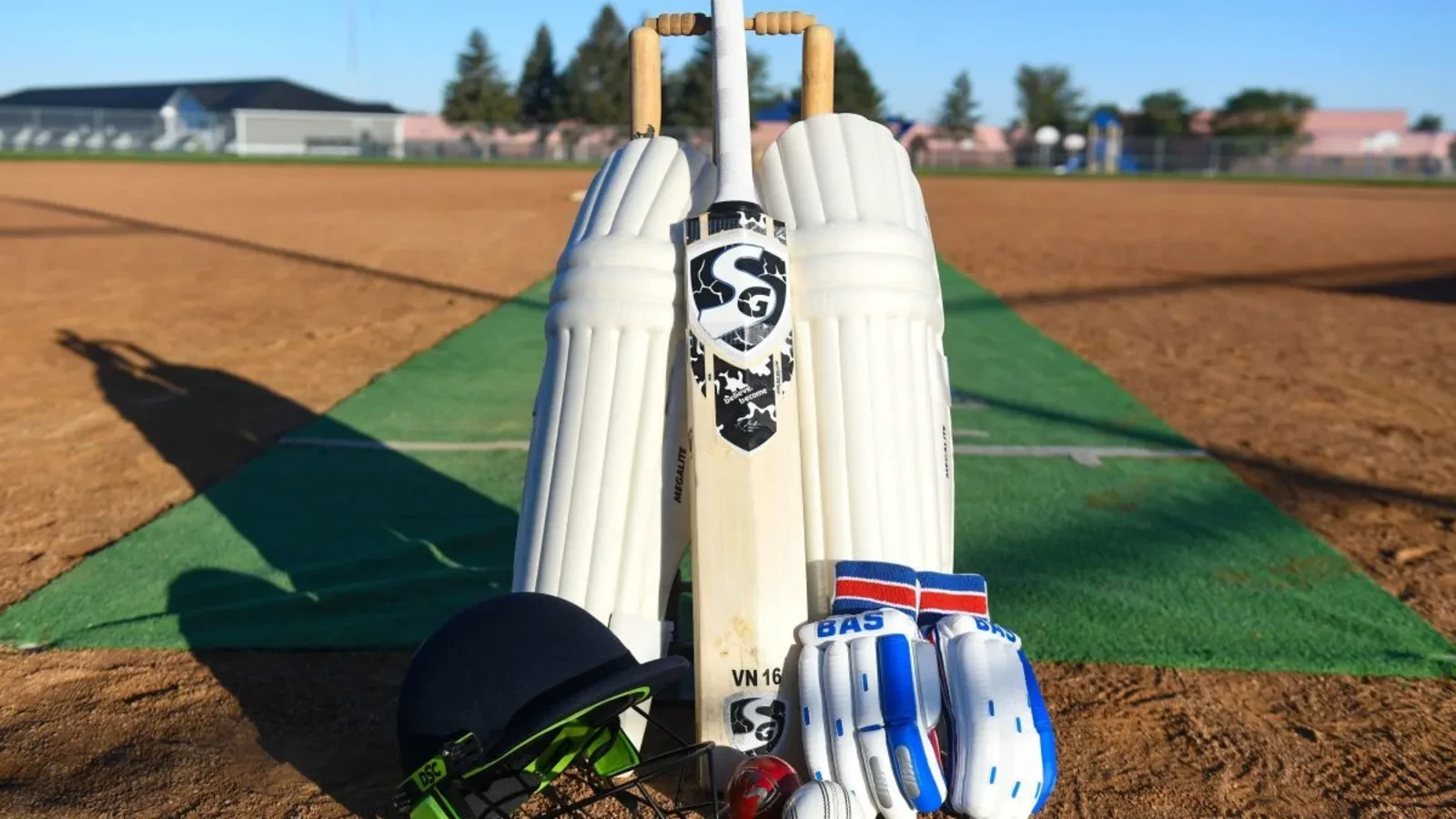
A leather cricket bat is crafted from willow wood, either English Willow or Kashmir Willow, and is built exclusively for use with a hard leather cricket ball. Every professional, club, school, and academy match is played with this type of bat.
English Willow is lighter, more fibrous, and delivers exceptional power and feel. It is the material used in professional-grade bats. Kashmir Willow is denser, more resilient, and well-suited to beginners, school players, and regular club cricket.
The leather bat weight for a full-size adult bat sits between 1.1 kg and 1.4 kg. The right weight supports proper technique. A bat that is too heavy forces a poor backlift and shoulder strain. A bat that is too light removes the driving power a leather ball demands.
If you want a deeper understanding of bat construction and willow performance, this guide on why wood quality matters in a cricket bat explains how timber density, grain structure, and pressing directly affect performance and durability.
You can also browse the full collection of premium cricket bats at ANA Sports Cricket Bat Collection to compare beginner, performance, and professional-grade options.
What Is a Tennis Cricket Bat? (And What Is a Hard Tennis Bat?)
The original content had a factual inaccuracy. Tennis cricket bats in India are not primarily made from composite materials, ABS plastic, or high density polyethylene. Research confirms they are predominantly made from Kashmir Willow and Poplar Willow wood. Here is the fully corrected and cross checked paragraph:
What Is a Tennis Cricket Bat? (And What Is a Hard Tennis Bat?)
A tennis cricket bat is made from Kashmir Willow or Poplar Willow wood and is designed for casual cricket with a rubber ball, soft tennis ball, or tape ball. Poplar Willow is lighter and better suited for younger players and soft ball formats. Kashmir Willow is denser and handles harder rubber ball play more reliably. Unlike leather ball bats, tennis bats do not require knocking in, oiling, or any preparation before use.
A hard tennis bat is made from Grade 1 Kashmir Willow with a denser fibre structure and is built specifically for hard tennis ball formats. This is the bat used in society tournaments, mohalla matches, and school ground cricket where a hard tennis ball is standard. Some hard tennis bats also feature a fibre or plastic coating on the blade for extra surface durability under repeated hard ball impact.
A quality hard tennis cricket bat is not a toy. It has a proper blade profile, a functional grip, and genuine durability for match-level rubber ball play. Tennis bat weight ranges from 800 g to 1200 g, which makes it noticeably lighter than any leather ball bat.
For players choosing a practice or rubber-ball bat for regular training, our Practice Cricket Bat Collection is specifically designed for high-volume practice sessions and casual cricket formats.
Leather Bat vs Tennis Bat: Full Comparison Table
|
Feature |
Leather Cricket Bat |
Tennis Cricket Bat |
|
Material |
English or Kashmir Willow |
Composite, ABS, Polyethene |
|
Best For |
Hard leather ball cricket |
Rubber ball, tennis ball, tape ball |
|
Weight |
1.1 kg to 1.4 kg |
800 g to 1200 g |
|
Durability |
2 to 5 seasons with care |
1 to 3 seasons casual use |
|
Performance |
High power, premium feel |
Adequate for casual formats |
|
Knock In Required |
Yes for English Willow |
Yes |
|
Price Range |
- |
- |
|
Recommended Level |
Beginner to Professional |
Casual, Gully, Practice |
Use this table to compare both bats at a glance before making your buying decision.
Understanding handle construction is equally important while selecting the right bat because grip feel and shock absorption change dramatically between bat types. Read our guide on types of cricket bat handles to understand how handle design impacts pickup and control.
Performance: Which Bat Hits Better?
For leather ball cricket, the leather cricket bat is the only correct choice. Willow grain structure flexes on impact and springs back with force, producing the power and feel that no composite material can match.
Using a tennis bat with a leather ball causes poor vibration transfer, hand pain on contact, and progressive blade deformation. Using a leather bat for rubber ball cricket compresses willow fibres unevenly and causes permanent face damage.
When choosing the best tennis cricket bat for rubber ball formats, focus on three things:
-
Blade thickness of at least 28 mm to hold shape under repeated impact and prevent inward flex during hard shots
-
A full-length grip that does not slip during play and keeps your hand position stable throughout a long innings
-
A strong spine profile that maintains its structure across hundreds of shots without warping or losing its natural bow
Getting these three things right separates a quality tennis cricket bat that lasts a full season from a cheap composite bat that loses its shape within weeks of regular use.
The placement of the sweet spot also plays a major role in shot power and bat pickup. If you want to understand how sweet spot position changes performance across formats, read our guide on the sweet spot of a cricket bat.
Can I Use a Leather Cricket Bat for Rubber Ball or Tape-Ball Cricket?
No. A leather cricket bat should not be used with a rubber ball.
Each shot with a rubber ball compresses willow fibres at the wrong pressure point. The face develops uneven dents, edges lose their structural integrity, and the natural bow of the blade distorts. Toe cracking follows in most cases. No amount of oiling reverses this damage once it sets in.
For gully cricket, society matches, and tape ball games, always use a lightweight tennis cricket bat or a poplar wood bat. These are purpose-built for softer-ball impact and take no damage from regular rubber-ball use.
Many players damage expensive bats simply because they use the wrong bat for the wrong format. Our detailed ultimate guide to cricket bats in India explains how to choose the correct bat based on playing conditions, level, and budget.
Which Tennis Cricket Bat Is Best for Practice and Beginners?
The best tennis cricket bat for beginners needs the right weight, a strong grip, and a blade that holds its shape with regular use.
Key things to check before buying:
-
Weighing between 750 g and 850 g suits players aged 10 to 16. Below that range, hitting stability drops. Above it, fatigue builds quickly in practice sessions
-
A full handle with a cushioned grip maintains correct hand position and reduces fatigue across long training sessions
-
A blade thickness of 28 mm or more prevents inward flex under hard rubber ball contact and keeps the bat performing consistently through heavy use
If you are buying your first practice bat, the best hard tennis cricket bat is one that balances durability, grip comfort, and correct pickup. Many players simply search for the best tennis bat without understanding that rubber-ball formats need a different construction from leather-ball cricket. A lightweight tennis cricket bat helps younger players react faster, reduce fatigue during long practice sessions, and improve shot timing naturally. Choosing the right tennis bat weight also matters because a bat that feels too heavy can slow bat speed and affect control during quick indoor or gully matches.
The ANA Sports Practice Series is specifically designed to meet this need. It supports high-volume net and practice use, comes in multiple sizes, and is designed for players transitioning from casual cricket to proper leather ball formats.
Young cricketers and school players should also choose the correct bat size for proper development and comfort. Use our complete cricket bat sizes chart to find the right size based on age and height.
Parents searching for lightweight beginner options can also explore our dedicated Junior and Youth Cricket Bats Collection designed specifically for younger players and early skill development.
Cricket Bat for Leather Ball: What to Look For
Choosing the right cricket bat for leather ball play requires attention to four things:
-
Willow type is the first decision. Kashmir Willow suits school players and entry-level club cricket. English Willow Grade 2 or 3 is right for serious club players competing regularly
-
Bat weight for adults should sit between 1.15 kg and 1.25 kg. Junior players need bats under 1.0 kg to avoid technique breakdown and physical strain
-
Grain count on English Willow between 6 and 10 straight grains indicates well-seasoned, match-ready timber. Bats with 5 to 6 wide grains can perform just as well and should not be dismissed
-
Knock-in is non-negotiable for English Willow. It conditions the blade fibres before match use and directly extends the bat's playing life. Kashmir Willow benefits from a light oiling before first use
-
A toe guard is strongly recommended for any leather cricket bat. The toe is the most vulnerable part of the blade, and a simple guard prevents the most common form of moisture and impact damage
Getting these five things right ensures your leather bat performs at its best from the very first match and lasts across multiple full seasons of competitive cricket.
Players moving into academy or club cricket should choose a full-size leather bat that matches their height and playing level. For beginners or budget-conscious buyers, a Kashmir Willow option is often the cheapest leather bat choice while still helping players build proper technique and confidence.
If you are unsure how willow grading works, this detailed guide on cricket bat grades explained breaks down English Willow and Kashmir Willow grading systems in simple terms.
Before using any English Willow bat in a match, proper preparation is essential. Learn the complete process in our guide on knocking in a cricket bat to improve durability and prevent premature cracking.
Players who prefer different handle lengths for reach and pickup can also read our comparison of long handle vs short handle cricket bats before choosing a bat.
Serious players looking for match-ready bats can browse our Performance Cricket Bat Collection and Professional Cricket Bats for higher-level club and academy cricket.
Is a Tennis Bat Good Enough to Learn Proper Cricket Technique?
For children aged 5 to 8, a lightweight tennis cricket bat works well. At that age, the goal is hand-eye coordination, enjoyment, and basic ball tracking. Format and technique are secondary.
For any player who wants to develop a real batting technique, a composite tennis bat is not adequate. The weight distribution does not match a willow bat. The pick-up feels different. The handle flex does not develop the correct wrist and hand response that leather-ball cricket demands.
Moving to a correctly sized best leather bat as soon as a player commits to proper cricket is the right call. A Kashmir Willow bat in the correct junior size builds genuine technique and muscle memory that a composite bat cannot replicate at any level.
For beginners moving into structured cricket training, the right starter bat makes a major difference in technique development. Explore our Cricket Bats for Beginners Collection for bats designed specifically for early-stage players.
Which Should You Buy? Final Recommendation by Player Type
Gully cricket and casual matches: Choose the best hard cricket tennis bat. Lightweight, durable, zero-maintenance, and built precisely for rubber and tape ball formats.
School beginner starting leather-ball cricket: Kashmir Willow Grade 2 or 3 in Harrow or short-handle size. The ANA Sports Beginners Series is a well-suited entry point.
Intermediate club player: English Willow Grade 3 or a Performance Series Kashmir Willow bat. Prioritise weight pickup and sweet spot position above all else.
Serious club or academy cricketer: English Willow Grade 1 or 2 from the Professional Series Bats. Knock it in correctly, oil it through the season, and it will perform across two to three full seasons of competitive cricket.
For players transitioning from rubber-ball to leather-ball formats, the ANA Sports Performance Series provides a full-size, genuine leather bat experience at a level appropriate for early development before moving to premium English Willow.
At ANA Sports, every bat goes through multiple quality inspection stages to ensure balance, grain quality, handle strength, and long-term durability. Learn more about how ANA Sports ensures cricket bat quality before choosing your next bat.
Cricket fans who closely follow professional formats and player equipment trends can also explore our complete IPL guide for deeper insights into the modern game.
Final Thoughts
The comparison between a leather cricket bat and a tennis cricket bat comes down to one simple question: what ball are you playing with?
Both bats are excellent tools when matched to the right format. The best tennis cricket bat serves millions of players in gully cricket, society tournaments, and casual weekend matches with complete reliability. For those formats, it is the better practical choice in every way. It is lighter, tougher against rubber-ball impacts, and requires no care between uses.
A leather cricket bat belongs in a completely different setting. The moment you step onto a proper pitch with a leather ball, willow is the only material that delivers real power, feel, and performance. That experience is what builds serious cricketers.
Choose based on your format. Buy the right bat. Go play.
Whether you are buying your first practice bat or upgrading to a professional willow bat, you can explore the complete range at ANA Sports Official Website to find bats built for every playing level and format.
Frequently Asked Questions
Q1. What is the difference between a leather cricket bat and a tennis cricket bat?
A leather cricket bat is made from willow and is used with a hard leather ball. A tennis cricket bat is composite and is built for a rubber ball or casual cricket. They are not interchangeable.
Q2. Can I use a leather cricket bat for rubber ball or tape ball cricket?
No. A rubber ball compresses willow fibres unevenly, causing permanent face damage, edge weakening, and toe cracking. Always use a composite or poplar wood bat for rubber ball formats.
Q3. Which tennis cricket bat is best for practice and beginners?
Choose a bat weighing 750 g to 850 g with a 28 mm blade and a full grip. The ANA Sports Practice Series is a strong, durable choice for beginners and school-level players.
Q4. Is a tennis bat good enough for a beginner to learn cricket techniques?
For young children in casual play, yes. For developing real batting technique and muscle memory, a Kashmir Willow leather bat in the correct size is far more effective.
Q5. What is a hard tennis bat, and who is it for?
A hard tennis bat has a dense composite shell built for indoor cricket and hard tennis ball formats. It suits society matches, school tournaments, and indoor training sessions.
Q6. Which bat is better for building cricket skills: leather or tennis?
A leather bat is better for skill development. Its weight, pick up, and feel train correct technique from the start. A tennis bat suits casual play but does not prepare a player for leather ball cricket.




Related Blog
English Willow vs Kashmir Willow Cricket Bat: Which One Should You Actually Buy?
Nov 13, 2025 by Admin
ANA Sports