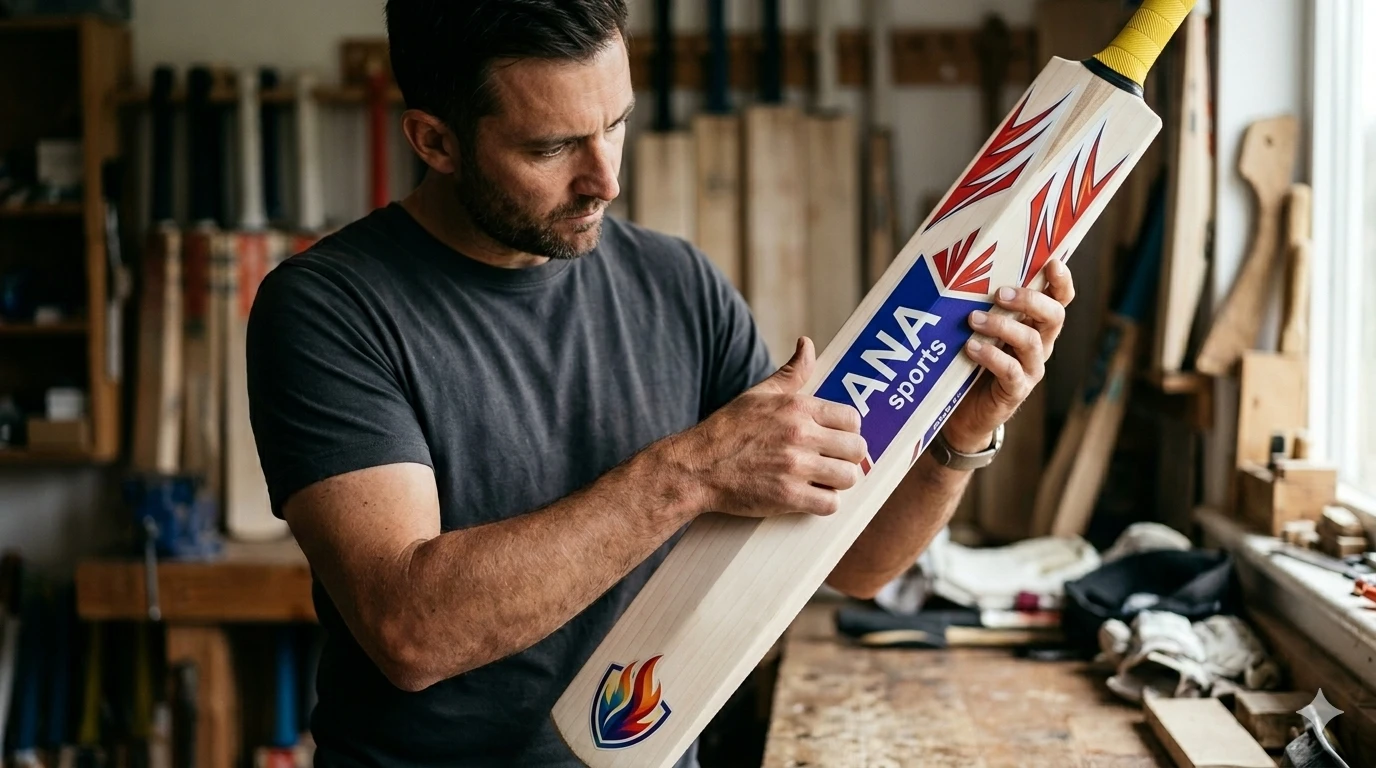
Why Wood Quality Matters in a Cricket Bat?
Why Wood Quality Matters in a Cricket Bat
Pick up two cricket bats of the same shape, same weight, and same price. Hit a ball with both. One will feel alive in your hands; the other will feel dead. That difference almost always comes down to one thing: the wood inside the bat. Most cricketers talk about weight, handle, and brand. Very few people talk about the wood. The wood is exactly what decides everything else.
If you have ever wondered why your bat does not feel right or why one bat costs three times another, this guide will answer that completely.
Quick Answer: Why Does Wood Quality Matter in a Cricket Bat?
Cricket bat wood quality directly determines a bat's power, feel, durability, and performance. A cricket bat is made of whichever wood you choose, whether English willow or Kashmir willow, as it determines everything from power to price. High quality English willow gives better energy transfer, lighter pickup and more responsiveness than lower grade willow or alternative woods.
If you're still deciding between the two, our detailed guide on English Willow vs Kashmir Willow Cricket Bats explains the differences in performance, durability, and value for different playing levels.
Research by cricket equipment manufacturers shows that Grade 1 English Willow generates 15 to 20% more ball speed off the blade compared to lower-grade alternatives. Because of this all professional cricketers in the world use premium willow bats for match play.
English Willow vs Kashmir Willow: Which Is Better for a Cricket Bat?
This is the most common question from players selecting their first serious bat and the answer is totally dependent on what you need the bat to do.
English Willow is widely regarded as the best wood for cricket bat performance at a competitive level. It is lighter for its size, has a more fibrous grain structure, and offers superior stroke response. Hit the ball well and with an english willow bat the energy transfer is immediate. The ball comes off the face with power even on half-shots, which is why every professional cricketer in the world uses English Willow.
Kashmir Willow is harder and denser. It does not offer the same power profile, but it is more forgiving of rough treatment. It handles high-volume net sessions better, needs less knocking-in, and costs significantly less. For beginners learning technique or for players doing intensive practice, Kashmir willow is not just acceptable. It is often the smarter choice.
New players should also consider selecting a bat designed specifically for skill development and regular practice sessions. Choosing the right beginner bat can significantly improve stroke development and confidence at the crease.
Here is a direct comparison to make the decision easier:
|
Factor |
English Willow |
Kashmir Willow |
|
Performance |
Excellent |
Good |
|
Weight |
Lighter |
Heavier |
|
Power |
Higher |
Moderate |
|
Durability |
Moderate (requires care) |
High |
|
Price |
Premium |
Budget-friendly |
|
Best For |
Match play, competitive cricket |
Practice and beginners |
|
Knocking-in |
Extensive, 4 to 6 hours |
Minimal |
If you are buying your first bat and want to understand how to identify genuine Kashmir Willow before purchasing, this guide on how to identify an original Kashmir Willow cricket bat is worth reading before you spend money.
What Wood Is a Cricket Bat Made Of?
A cricket bat is made from willow wood. And not just any willow, but carefully chosen species selected over more than two centuries of bat-making history. There are two main types used today: English Willow and Kashmir Willow. Both come from the willow family, but they are harvested from different regions, have different densities, and perform very differently on the pitch.
Understanding the different types of cricket bats available in the market can help players match the right willow, profile, and playing style to their needs.
The cricket bat wood name you will hear most in professional cricket is Salix alba caerulea, which is the scientific name for English Willow. Kashmir Willow comes from Salix triandra, a related species grown in the valleys of Jammu and Kashmir.
Willow was chosen for bat-making because of a rare combination of qualities: it is lightweight, fibrous, shock-resistant, and capable of compressing under impact without cracking. No other commercially available timber replicates this profile. Over the years, bat-makers in Meerut, Sialkot, and England have all come back to willow as the only wood worth using.
A single willow tree takes between 15 and 20 years to reach harvesting maturity, according to JS Wright and Sons, one of England's leading willow suppliers. That same company supplies approximately 75% of the willow used in the world's cricket bats. Each tree yields around 40 usable bat blades, which explains why premium English Willow commands the prices it does.
Expert Insight: What Experienced Bat Makers Actually Look For
Experienced bat makers often prioritise grain consistency over grain count. A bat with 7 straight grains usually performs better than a bat with 12 uneven grains because consistency improves energy transfer evenly across the entire blade face.
Grain structure is only one part of overall bat quality. Factors such as willow grading, pressing, and manufacturing standards also play a major role in determining performance.
This is a critical point that most buying guides miss. Grade 1 English Willow is classified not just by the number of grains but by how straight and evenly spaced those grains are. According to Chase Cricket, one of the UK's respected bat manufacturers, Grade 1 Limited Edition willow represents the top 1% of all English Willow harvested. Grade 1 Premium represents the top 4%. Most players will never need either, but understanding this hierarchy helps you make a smarter buying decision at every price point.
How Grain Count Affects Cricket Bat Wood Quality
The grain lines on the face of a cricket bat are not just cosmetic. They are a direct indicator of how the wood will perform and how long it will last.
Grain count refers to the number of growth rings visible on the blade face. Each ring represents one year of tree growth. Bats are cut from trees that are between 15 and 25 years old, and the number of grains tells you a great deal about the wood's character:
-
4 to 6 grains: Wide grains indicate fast early growth. These bats need more knocking-in and take time to reach peak performance, but they can develop into excellent match bats over a full season.
-
7 to 9 grains: This is the sweet spot. Tight, even grains mean the wood grew slowly and steadily, producing a blade that is responsive from early use and holds up well under sustained play.
-
10 or more grains: Very tight grains can indicate older, harder wood. Performance is good but the blade may lack the natural spring of mid-range grain bats.
The grain structure directly influences the location and effectiveness of the bat's sweet spot, which is why professional bat makers pay close attention to grain consistency during manufacturing.
The ICC has no specific rule on grain count, but experienced bat-makers in Meerut, who have been crafting cricket bat wood blades for generations, consistently identify 6 to 9 grains as the ideal range for match bats.
Why Wood Grade Matters When Buying a Cricket Bat
Cricket bat wood is graded on a scale from Grade 1 to Grade 4. Grade is determined by the straightness of grains, the presence of blemishes or red wood, and the overall visual quality of the blade face.
If you're unsure how willow grades affect performance, value, and durability, understanding the grading system can help you make a more informed buying decision.
-
Grade 1: Perfectly straight grains, no blemishes, white face, premium performance. These go into professional and international-level bats.
-
Grade 2: Slight colour variation or minor grain waviness. Performance is excellent, and these bats are the standard for serious club cricketers.
-
Grade 3: Visible knots, red wood, or irregular grains. More durable but lower responsiveness. Good for practice and intermediate play.
-
Grade 4: Cosmetically imperfect but structurally solid. Suitable for beginners or training use.
According to B3 Cricket, a recognised English Willow bat manufacturer, Grade 2 bats come from the top 10 to 20% of genuine English Willow harvested. That means the vast majority of trees never produce wood good enough for Grade 1 or Grade 2 blades, which is why high-grade bats carry the price tags they do.
Understanding grades is especially useful when you are buying a performance cricket bat and want to know exactly what level of willow you are getting for your money.
Common Mistakes When Choosing Cricket Bat Wood
So many cricketers spend years using the wrong bat because nobody explains this clearly enough at the beginning. These are the most common mistakes players make when selecting cricket bat wood:
-
Assuming more grains always means better performance. A bat with 12 uneven grains will underperform a bat with 7 perfectly straight grains. Consistency beats count every time.
-
Buying Grade 1 English Willow before developing technique. Grade 1 bats reward timing and placement. A player still working on footwork and stroke mechanics will not extract the performance difference and risks damaging an expensive blade before it is properly knocked in.
-
Ignoring bat pickup and balance. A bat that weighs 1.2kg but feels heavy in the hands will slow your swing. A bat that weighs 1.3kg but has a low middle can feel light. Always pick up the bat before deciding. Bat size and handle length also affect pickup and balance, making it important to choose dimensions that suit your height and playing style.
-
Choosing weight over wood quality. Many players obsess over grams and miss the fact that a lighter bat made from higher grade willow will outperform a heavier bat from lower grade wood in almost every stroke category.
-
Purchasing unverified Kashmir Willow bats. The market has significant variation in Kashmir Willow quality. Always buy from a manufacturer with transparent grading and a reputation for consistency.
For a complete breakdown of how different bat constructions suit different playing levels, the types of cricket bats guide is a useful reference before you commit to a purchase.
How Wood Quality Affects Feel, Power, and Durability
Every quality that makes a cricket bat good comes back to the wood. Here is how wood quality directly affects three things every cricketer cares about:
Feel: High-quality English Willow has a naturally soft, fibrous face that compresses slightly on impact and then springs back. This gives the distinctive ping and responsive feel on well-timed shots. Lower-grade or overly dense wood feels harder and gives less feedback through the handle.
Power: Power in a cricket bat is not just about weight or profile. It comes from how efficiently the wood transfers energy from impact to ball. Tight-grained, properly pressed Grade 1 and Grade 2 English Willow transfers energy more efficiently than any alternative. This is why a lighter English Willow bat can hit further than a heavier Kashmir Willow bat.
Durability: Properly maintained willow, regardless of grade, will last several seasons. Knocking-in is the single most important preparation step. For English Willow especially, 4 to 6 hours of knocking-in with a mallet before the first match use is not optional. It compresses surface fibres and dramatically reduces the risk of cracking. Proper knocking-in a cricket bat helps compress willow fibres and unlocks the bat's full performance potential while reducing the risk of premature cracks.
Which Wood Is Used to Make Cricket Bats at Different Levels?
Which wood is used to make cricket bat blades depends on the level of cricket being played:
-
International and first-class cricket: Grade 1 or Grade 2 English Willow exclusively
-
Club and academy cricket: Grade 2 or Grade 3 English Willow
-
Beginner and net sessions: Kashmir Willow or Grade 3 to Grade 4 English Willow
-
Youth cricket: Kashmir Willow or specially sized English Willow blades
For anyone starting out, a cricket bat for beginners made from quality Kashmir Willow gives you all the durability you need while you focus on building your technique. As your game develops, moving to English Willow becomes the natural next step.
Frequently Asked Questions
Q: What is the best wood for a cricket bat?
English Willow, specifically Grade 1 Salix alba caerulea, is the best wood for a cricket bat. It offers the ideal combination of light weight, fibrous structure, and energy transfer for competitive play.
Q: Why is willow used to make cricket bats and not other wood?
Willow is uniquely light, fibrous, and shock-resistant. It compresses on impact without cracking and springs back efficiently which no other widely available timber does at the same weight.
Q: Is Kashmir Willow good for cricket?
Yes. Kashmir Willow is excellent for practice, beginners, and players who need a durable bat for intensive net use. It is denser than English Willow but handles heavy use well.
Q: How many grains should a good cricket bat have?
A good cricket bat should have 6 to 12 grains on the blade face. This range indicates steady tree growth and a blade that is both responsive and durable.
Q: Does the wood grade affect bat performance?
Yes, directly. Higher grade wood has straighter grains, fewer blemishes, and better energy transfer. Grade 1 bats are better from the beginning and are more consistent in their response to timing.





Related Blog
English Willow vs Kashmir Willow Cricket Bat: Which One Should You Actually Buy?
Nov 13, 2025 by Admin
ANA Sports