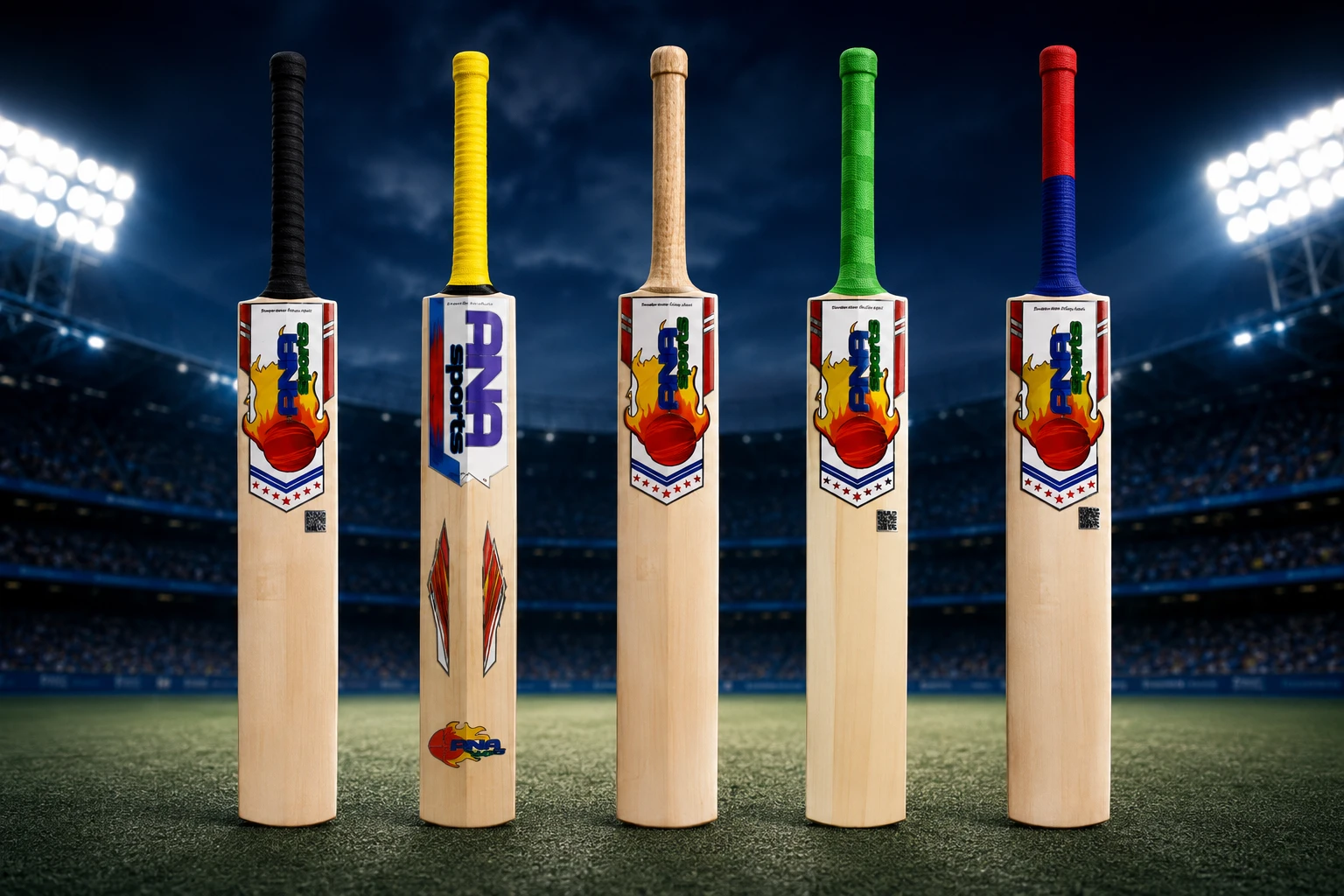
Cricket Bat Grades Explained: What Grade 1, 2, 3 and 4 Actually Mean
Cricket Bat Grades Explained: What Grade 1, 2, 3 and 4 Actually Mean
You searched for english willow cricket bats grade 1, found dozens of listings all claiming to sell the best, and now you are not sure which one is genuine. You are not alone. Bat grading is one of the most misused terms in cricket retail, and it costs buyers real money. This guide cuts through the confusion. By the end, you will know exactly what each grade means, how to spot it, and which grade suits your game.
What is a Cricket Bat Grade?
Bat grade refers to the quality and straightness of the grain in the willow blade. Grade 1 is the highest quality featuring 6 or more perfectly straight grains and a pure white face. Grade 4 is the lowest, with fewer grains, machine pressing, and visible imperfections. Grade does not measure bat performance directly; it measures raw material quality.
How Many Grades of English Willow Are There?
English Willow bats are commercially graded from 1 to 4. Here is what each grade actually means:
-
Grade 1+ English Willow - 8–12 straight grains, exceptionally clean white face with minimal blemishes or red wood. These premium handcrafted bats are made from the finest clefts, specially selected for advanced players and professional-level performance. Expect prices to start from ₹25,000 and go up to ₹90,000+ depending on grain quality, weight profile, and brand craftsmanship.
-
Grade 1 English Willow - 8-10 straight grains, pure white face with no blemishes or colouring. These are handcrafted blades selected for elite and professional use. Expect to pay ₹20,000 up to ₹60,000+.
-
Grade 2 English Willow - 5-7 straight grains with minor natural marks such as butterfly stains or slight colouring. Performance is excellent and largely indistinguishable from Grade 1. Ideal for serious club players. Price range: ₹8,000 up to ₹30,000+.
-
Grade 3 English Willow - 4–6 straight grains with visible knots, colour variation, or surface marks. Well-suited for intermediate cricketers who play regularly but do not need a competition-grade blade. Price range: ₹6,000 up to ₹15,000+.
-
Grade 4 English Willow - 4 mixed or wide grains, heavily machine pressed for extra durability. Built for beginners and net sessions. Price range: ₹4,500 up to ₹9,500.
Grade 1 English Willow - Complete Breakdown
What Does Grade 1 English Willow Look Like?
A genuine Grade 1 English Willow blade is easy to identify once you know what to look for. Here is what to check:
-
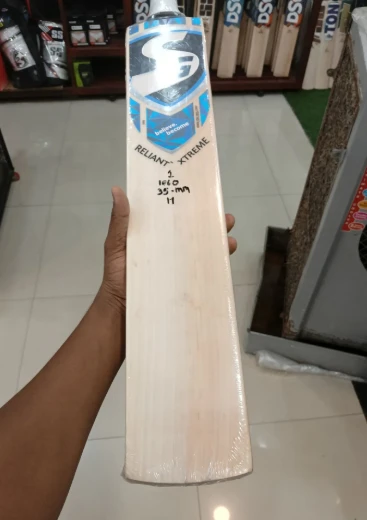
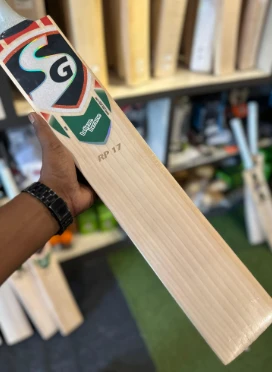
Grain Count: Count the vertical lines running from the shoulder to the toe of the bat. Grade 1 will have 8-10 or more evenly spaced, straight grains. Fewer grains or irregular spacing is a red flag.
-
Face Colour: The face should be pure white or off-white. Any red, pink, or brown staining indicates the wood is closer to the heartwood, which is a Grade 2 or below characteristic.
-
Grain Straightness: Run your eye from top to bottom. In a Grade 1 bat, grains run perfectly parallel from shoulder to toe with no deviation or waviness.
-
No Visible Blemishes: No knots, no butterfly marks, no resin pockets. The face should look clean and uniform across the entire surface.
-
When Buying Online: Request a clear, full-face image in natural lighting. Reputable brands like ANA Sports publish actual product photos, not stock images.
Learn the complete difference here: English Willow v/s Kashmir Willow
Who Should Buy a Grade 1 English Willow Bat?
Grade 1 English Willow bats are made for cricketers who play competitive leather ball cricket at least two to three times per week. Academy-level players, state-level club cricketers, and anyone who demands maximum blade response from every shot should be looking at Grade 1.
If you are at that level, the Grade 1 English Willow ANA Sports Professional Series is engineered specifically for competitive play, combining premium raw material with precision hand-crafting.
Grade 2 English Willow - The Club Player's Choice
For the majority of club cricketers in India, Grade 2 English Willow is the smartest buy on the market. You get genuine English Willow performance at a price that makes sense for weekend competition.
Here is the key misconception to clear up: natural marks on a Grade 2 bat do not affect performance. Butterfly stains and slight colouring are cosmetic byproducts of where the wood sits in the tree. They say nothing about how the bat will drive the ball through the covers.
A Grade 2 bat from a quality manufacturer will outplay an unbranded Grade 1 bat every time, because blade grade is only one half of the equation. Craftsmanship, profile, spine height, and the quality of the knocking process all determine how a bat actually performs in the middle.
Grade 3 English Willow - Is It Worth Buying?
Short answer: yes, with conditions.
Grade 3 English Willow gets unfairly dismissed by cricketers who equate lower grade with lower performance. That logic is flawed. A Grade 3 blade crafted by a quality manufacturer with a proper spine profile, correct pressing, and thorough knocking will outperform a Grade 2 bat from a factory producing low-quality bats at scale.
Grade 3 is the right choice for intermediate cricketers who play regularly, want genuine English Willow feel, and do not want to invest Rs 6,000 or more in a Grade 1 blade while their game is still developing. It is also a sound choice for net practice for players who normally use a Grade 1 match bat. You can also check out dedicated practice cricket bats
Grade 1 Kashmir Willow - Does Kashmir Willow Have Grades?
Yes, Kashmir Willow bats are also graded, though the system varies by manufacturer. You will see Grade A / B / C or Grade 1 / 2 / 3 depending on the brand.
The grading principles are similar: grain quality, density, straightness, and absence of defects. Grade A (or Grade 1) Kashmir Willow features dense, even-grained wood with consistent colour, suitable for regular net practice, school cricket, and entry-level leather ball matches.
The critical distinction to understand is this: Kashmir Willow grading and English Willow grading are not directly comparable. A Grade 1 Kashmir Willow bat is not equivalent to a Grade 1 English Willow bat. English Willow is inherently lighter and more responsive, which is why it remains the wood of choice for professional cricket worldwide.
Kashmir Willow bats are available in Grade 1, Grade 2, and Grade 3, with prices starting from ₹1,500 and going up to ₹6,500.
Grade Comparison Table - English Willow vs Kashmir Willow
Use this table as a quick reference before you buy:
|
Grade |
Willow Type |
Grain Count |
Best For |
Price (Rs) |
|
Grade 1 |
English |
6+ straight grains, white face |
Elite / Academy |
₹20,000 up to ₹60,000+. |
|
Grade 2 |
English |
5–6 grains, minor marks |
Club players |
₹8,000 up to ₹30,000+ |
|
Grade 3 |
English |
4–5 grains, knots/colour variation |
Intermediate |
₹6,000 up to ₹15,000+ |
|
Grade 4 |
English |
Under 4 grains, heavy pressing |
Beginners / Nets |
₹4,500 up to ₹9,500 |
|
Grade A |
Kashmir |
Dense, even grain, clean face |
School / Net sessions |
₹1,500 up to ₹3,000 |
|
Grade B |
Kashmir |
Moderate grain, minor marks |
Beginners |
₹3,000 up to ₹5,000 |
Prices may vary depending on factors such as bat quality, brand, and craftsmanship. The price ranges mentioned here are only intended to give you a general idea.
How to Identify the Grade of Your Cricket Bat
Follow these five steps before buying any bat, in a shop or online:
-
Count the grains. Look at the face of the blade. Count the vertical lines from edge to edge. More straight grains generally indicate higher grade.
-
Check the face colour. A white or off-white face indicates wood from the outer sapwood the prime zone. Pink, red, or brown colouring suggests heartwood proximity, lowering grade.
-
Inspect for blemishes. Look for knots (dark round marks), butterfly stains (oval-shaped marks), or resin pockets. A Grade 1 bat will have none of these.
-
Assess grain straightness. Grains that curve or waver from top to bottom indicate lower grade. Perfectly parallel vertical lines from shoulder to toe are what you want.
-
Check the manufacturer's label. Reputable manufacturers clearly state the grade on the bat label or product listing. If the grade is vague or missing, that is a warning sign.
Learn how ANA Sports ensures cricket bat quality
Does Grade Always Equal Performance?
No and this is the most important nuance in the entire bat-buying process. Grade is a raw material indicator, not a finished product quality guarantee.
Think of it like this, the finest cut of willow in the world, poorly shaped, incorrectly pressed, and badly knocked, will underperform a mid-grade blade that has been expertly crafted. The variables that determine on-field performance include:
-
Spine height and profile - a high spine concentrates mass behind the ball for maximum power transfer.
-
Edge thickness - wider edges increase the sweet spot.
-
Pressing quality - the right level of pressing determines durability without killing natural fibre responsiveness.
-
Knocking-in - proper preparation opens the willow fibres and prevents cracking.
-
Manufacturer expertise - brands with decades of experience produce better bats from the same grade of willow.
This is why a Grade 2 English Willow bat from ANA Sports will outperform an unmarked Grade 1 from an unknown marketplace seller.
Manufacturer expertise - brands with decades of experience produce better bats from the same grade of willow. If you are still choosing the right bat profile and handle type, read this detailed guide
Which Bat Grade Should You Buy? Decision Framework
Match your grade to your playing level - it is that straightforward:
-
Complete Beginner: Grade 4 English Willow or Grade B Kashmir Willow. Durable, affordable, forgiving. Browse beginner cricket bats
-
Regular Net Sessions / School Cricket: Grade A Kashmir Willow or Grade 3 English Willow. Good feel, sensible price.
-
Intermediate Club Cricket: Grade 2 or Grade 3 English Willow. Genuine performance without paying for cosmetic perfection.
-
Serious Club Player: Grade 2 English Willow. The sweet spot of quality and value for most adult cricketers.
-
Academy / State / Competition Level: Grade 1 English Willow only. You are performing at a level where raw material quality directly impacts your game. Explore premium professional bats
Frequently Asked Questions
Q: What does Grade 1 English Willow mean on a cricket bat?
Ans: Grade 1 English Willow is the highest quality raw material classification for cricket bat blades. It means the willow features 6 or more straight, evenly spaced grains and a pure white face with no knots, staining, or blemishes.
Q: How many grades of English Willow are there?
Ans: There are four commercial grades of English Willow: Grade 1 (premium, 6+ grains, white face), Grade 2 (club-level, 5–6 grains, minor marks), Grade 3 (intermediate, 4–5 grains, visible imperfections), and Grade 4 (beginner, under 4 grains, heavy pressing). Some manufacturers also use a Grade 5 category for practice bats.
Q: Is Grade 3 Kashmir Willow good for beginner cricketers?
Ans: Yes, Grade 3 Kashmir Willow is a practical choice for beginners. It offers decent durability, reasonable feel, and an affordable price point for players who are learning the game.
Q: How do I identify the grade of my cricket bat from its appearance?
Ans: Count the grains on the face, more straight grains indicate higher grade. Check whether the face is white (higher grade) or coloured (lower grade). Look for knots or butterfly marks. Grade 1 bats will have 6+ perfectly parallel grains, a clean white face, and zero blemishes. Always cross-check against the manufacturer's stated grade.
Q: What is the difference between Grade 1 and Grade 3 English Willow?
Ans: Grade 1 offers 6+ straight grains, a pure white face, no visual imperfections, and is made for elite players. Grade 3 has 4–5 grains, may feature colour variation or minor knots, and is suited to intermediate cricketers. The performance gap narrows significantly when Grade 3 is sourced from a skilled manufacturer.
Q: Can a Grade 3 bat perform as well as a Grade 1 bat?
Ans: In some cases, yes. A well-crafted Grade 3 bat with the right spine profile, pressing, and knocking-in from a reputable brand can outperform a poorly made Grade 1 bat. Blade grade indicates raw material quality, not finished product performance. Manufacturing quality matters equally.
Q: Is Grade 1 English Willow worth the price for amateur cricketers?
Ans: For most amateur players, Grade 2 English Willow delivers comparable on-field performance at a lower price. Grade 1 makes most sense for academy players, state-level performers, or serious club players who play leather ball cricket multiple times per week and can fully exploit the premium willow's capabilities.
About ANA Sports
ANA Sports is an Indian cricket equipment brand committed to making quality bats accessible to cricketers at every level from first leather ball to state selection. Every bat in the ANA Sports range is clearly graded, transparently priced, and built to perform, not just to sell.
Our team grades every blade individually before production begins. We do not label bats to sound premium, we label them accurately, so you know exactly what you are buying. Explore the full range at www.anasports.com.
Follow ANA Sports:





Related Blog
English Willow vs Kashmir Willow Cricket Bat: Which One Should You Actually Buy?
Nov 13, 2025 by Admin
ANA Sports