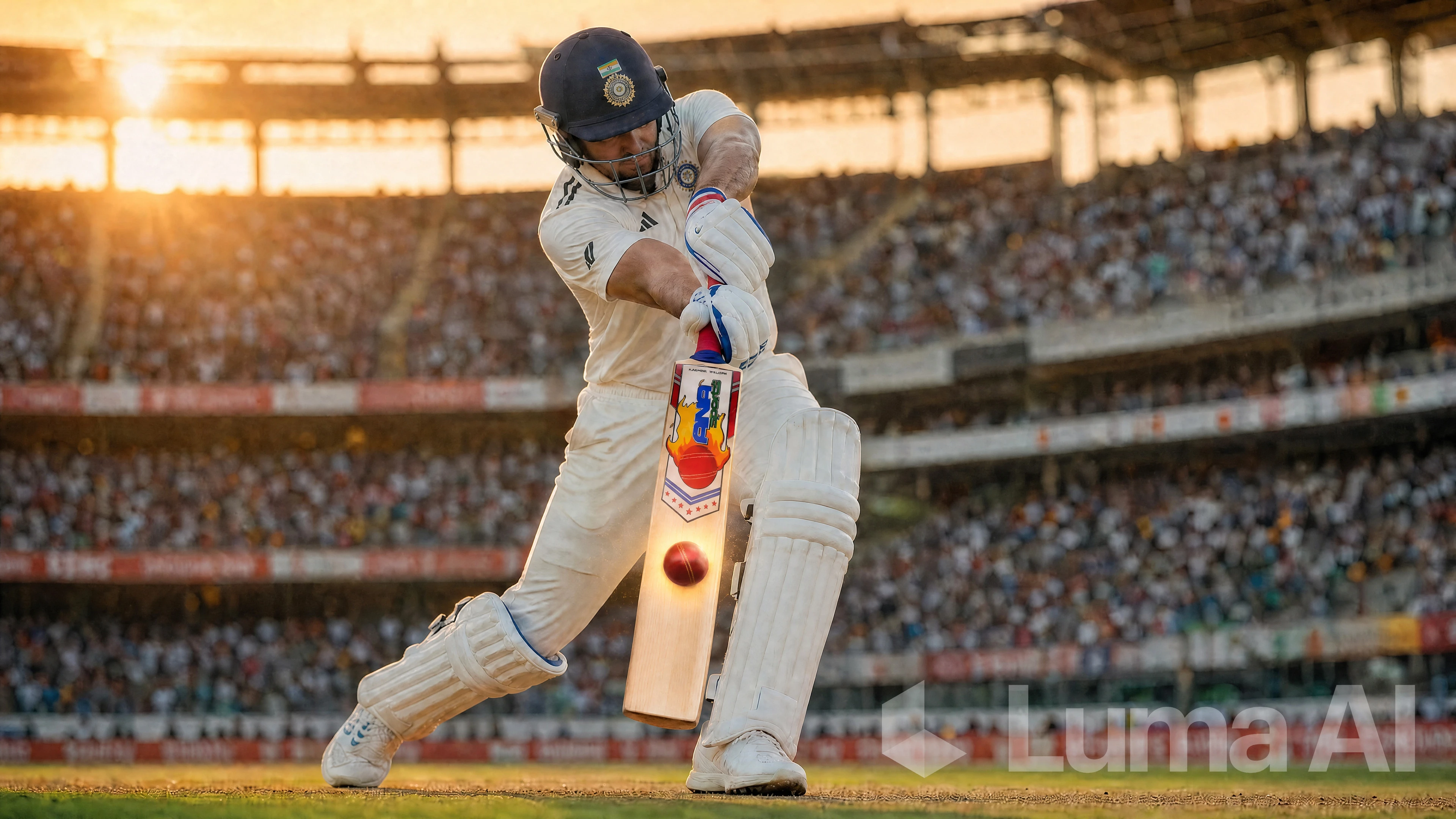
Sweet Spot of Cricket Bat: What It Is, Where It Sits, and Why It Changes Everything
You've felt it before. Even if you didn't know what to call it.
That one shot, maybe a cover drive or maybe a pull shot, where the ball left the bat so cleanly that you barely felt the impact. There was no sting in the palms and no jarring sensation running up the forearm. Just a clean and sharp crack followed by the ball racing to the boundary like it had somewhere urgent to be. You did not hit it harder than usual. You simply hit it better.
That was the sweet spot of a cricket bat doing exactly what it's designed to do.
Now think about the opposite. A delivery that looked identical and a shot that felt identical, yet you caught it slightly higher or lower on the blade. Suddenly, the bat shuddered in your hands, the ball lobbed tamely towards mid off, and you walked away knowing you had mistimed it without fully understanding why.
Same ball. Same shot. Same batter. Completely different result, all because of a few centimetres on the blade face.
This is exactly why the sweet spot of a cricket bat is one of the most important things to understand when choosing a bat, developing your technique, or figuring out why your timing feels inconsistent, especially when selecting a Cricket bat for Beginners. It is not just a marketing language. It is physics. Once you understand it properly, you begin looking at bat selection and even your own game in a completely different way.
This guide covers everything such as what the sweet spot in cricket bat design actually is, where it sits on different bat profiles, how cricket bat sweet spot position changes with playing style and format, what a low sweet spot cricket bat means in practice, and how to find a cricket bat with the biggest sweet spot that actually suits your game rather than just sounding impressive on a spec sheet.
What Is the Sweet Spot of a Cricket Bat?
Most guides mention the topic briefly but avoid explaining it properly.
The sweet spot of a cricket bat is the specific zone on the blade where the ball produces maximum rebound energy upon impact, meaning more power, cleaner contact, and significantly less vibration travelling up to your hands. Hit the ball bang on the sweet spot, and the shot almost plays itself. Hit it an inch above or below, and you feel it, sometimes painfully so.
It's not just a manufacturer's marketing term. The sweet spot in cricket bat design is a real, measurable phenomenon rooted in physics, specifically in the concept of the "centre of percussion" (COP), the point at which an impact produces zero reaction force at the handle. When the ball meets the blade at the COP, energy transfer is at its peak and handle shock is at its lowest.
In practical terms, the sweet spot is where your bat performs best, although different types of cricket bats position that sweet spot differently depending on the playing style. Everything else about the bat, including the profile, the bow, the edge thickness, and the willow grade, is engineered to make that zone as large and as responsive as possible.
The Science Behind It
Most players intuitively understand the sweet spot of a cricket bat without knowing the physics driving it. Let's break it down simply.
A cricket bat behaves like a flexible beam when struck. When the ball hits the blade, two things happen simultaneously:
-
Vibration nodes determine where the bat resonates and where it doesn't.
-
The centre of percussion determines where the force transfer to the handle is minimised.
When these two points align, which good bat design aims for, the result is a zone that returns energy cleanly to the ball with minimal loss. That's the sweet spot in cricket bat terms. It's not a single dot; it's an area, usually spanning about 3–5 cm vertically on the face of the blade.
The size and responsiveness of this zone depend heavily on:
-
Blade profile (spine height, bow depth)
-
Wood density and grain count
-
Pressing technique — over-pressed bats lose fibre responsiveness
-
Edge thickness — thicker edges widen the effective hitting zone
Where Is the Sweet Spot Located?
The cricket bat sweet spot position varies by bat design, and this is where a lot of players get confused.
On a traditional bat, the sweet spot sits roughly in the lower-middle section of the blade, between 100mm and 200mm up from the toe. This suits a front-foot-heavy game on good batting surfaces where the ball comes onto the bat and a full-face drive is the dominant shot.
On modern bats, particularly those designed for T20 and aggressive formats, manufacturers have shifted the sweet spot higher up the blade. A high sweet spot starts from around 180mm up from the toe, putting it in the zone where pull shots, flicks, and short-ball play tend to connect.
To understand the cricket bat sweet spot position clearly:
|
Sweet Spot Location |
Starting Height from Toe |
Best Suited For |
|
Low sweet spot |
80–130 mm |
Front-foot play, full drives, long-format batting |
|
Mid sweet spot |
130–180 mm |
All-round play, mixed formats |
|
High sweet spot |
180–230 mm |
T20, short-pitch play, cross-bat shots |
Neither is objectively better, which is why following a proper bat selection guide is important before choosing a bat profile. The right cricket bat sweet spot position depends entirely on how you bat, what format you play, and what the pitches in your region typically offer.
High vs Low Sweet Spot — What's the Difference?
This is arguably the most practically useful thing to understand when buying a bat.
Low Sweet Spot Cricket Bats
Low sweet spot cricket bats are built for traditional technique. The blade is shaped to maximise performance on fuller-pitched deliveries such as cover drives, on drives, and straight drives. The power zone sits lower because that's where the ball connects when you're playing forward and getting to the pitch of it.
These bats typically feature:
-
A flatter face with the bow positioned lower on the blade
-
Strong lower spine for extra power on front-foot shots
-
Better performance on flat, true pitches where the ball comes through at a predictable height
If you bat primarily in Test-style matches, red-ball club cricket, or on good batting tracks in India where the ball stays low, a low sweet spot cricket bat is likely the better technical fit.
High Sweet Spot Cricket Bats
High sweet spot bats shift the power zone up the blade to reward cross-bat hitting, cut shots, pulls, and anything played off the back foot when the ball rears up sharply.
These bats typically feature:
-
More pronounced middle bow that peaks higher up the blade
-
Thicker edges and bigger profiles
-
Better performance on bouncier pitches or in shorter-format cricket, where deliveries are more varied
Most modern T20 bats, including the ones with thick edges, chunky profiles, and aggressive shapes, are engineered around a high sweet spot, which is why many players prefer a Performance Cricket bat for aggressive stroke play.
Cricket Bat Sweet Spot Position and Playing Style
Your technique should directly inform where you want the sweet spot of your cricket bat to sit.
Front-foot dominant players
The ones who love to drive, who move into the line of the ball, and who score heavily through the V should be looking at bats with a low to mid sweet spot. Your shots are played with the full face of the bat coming through straight, so the contact zone on a fuller delivery naturally sits lower on the blade.
Back-foot players
Those who like to rock back and cut, pull, or punch through the offside tend to benefit from a higher sweet spot. When you're on the back foot, the ball usually catches higher up the bat.
All-format players
Anyone moving between T20 leagues and longer formats is usually best served by a mid sweet spot. Using the correct Cricket Bat Sizes also becomes important here because proper bat dimensions directly affect pickup, balance, and shot control across formats. It acts as a balanced compromise that keeps you functional across different shot types without sacrificing too much in either direction.
One thing worth noting that young players who are still developing their game should generally be steered toward a mid sweet spot, which is commonly found in well-balanced Junior and Youth Bats. It gives them room to build technique without the bat working against them when they're still ironing out their footwork.
Which Bats Have the Biggest Sweet Spot?
This is one of the most common questions around cricket bat sweet spot design, and the answer is far more nuanced than most product descriptions suggest.
A cricket bat with the biggest sweet spot is typically one that combines:
-
Thick edges (38–42mm range): wider edges extend the effective hitting zone laterally
-
High spine profile: more wood mass behind the blade increases the bounce-back energy across a larger area
-
Moderate to aggressive bow: pushes the mass distribution toward the power zone
-
Good quality willow: Grade 1 or Grade 2 English Willow with tight grains and natural fibre that hasn't been over-pressed responds across a wider area
In physical terms, a wider sweet spot does not mean the entire blade becomes the sweet spot. Instead, it means the gradient of performance around that central zone becomes more forgiving. A delivery that catches the edge of a wide sweet spot bat can still produce a decent result, whereas the same shot on a narrower sweet spot bat may jar your hands or fall short.
Heavy and over-engineered bats with massive profiles can technically have a larger sweet spot, but if the overall weight becomes too high for the player, you lose the bat speed needed to get the most out of it. A big sweet spot only works when you can move the bat at pace, which is why understanding Long Handle vs Short Handle Cricket Bat differences can help improve control and pickup.
The best bats balance sweet spot size with playable weight, although comparisons between English vs Kashmir willow bats show how wood density also affects performance. That balance comes down to manufacturing judgment, which is why the quality of the willow and the craftsmanship involved in the pressing process matter just as much as the physical dimensions.
How to Find the Sweet Spot on Your Bat
If you want to physically locate the sweet spot of a cricket bat you already own, there's a simple method that works consistently:
-
Hold the bat loosely at the top of the handle using two fingers rather than a full batting grip. This allows the bat to respond freely.
-
Tap a cricket ball gently up and down the blade face, starting near the toe before gradually working upward.
-
Listen and feel carefully. The spot where the ball rebounds most cleanly with the least vibration and the clearest sound is your sweet spot. Above and below that area, you will immediately notice the difference.
The tap test is how bat manufacturers verify the sweet spot during quality control, and it forms an important part of the overall cricket bat quality process.
Another method is to hang the bat from a string looped around the handle before tapping the blade face at different points. The area that produces the clearest tone along with the least handle movement is the centre of percussion, which is effectively your sweet spot.
Sweet Spot and Willow Grade — Is There a Connection?
Yes, and it's worth understanding this if you're making a serious bat purchase, especially when comparing different Cricket Bat Grades.
Grade 1 English Willow
Grade 1 English Willow has tight and consistent grain lines along with minimal surface blemishes. The fibre structure is naturally optimised for energy return, which means the sweet spot responds more sharply, rebounds more cleanly, and performs across a wider zone when compared to lower-grade willow.
Grade 2 English Willow
Grade 2 English Willow is still an excellent option. It may have minor colour variations or a slightly less even grain structure, but the overall performance remains very close. For most club cricketers, the difference between Grade 1 and Grade 2 is fairly marginal in real playing conditions.
Kashmir Willow
Kashmir Willow has a denser structure. The sweet spot in cricket bat terms is still present, although the energy return feels less lively. You generally need to hit harder to achieve the same result from a Kashmir Willow bat. That works perfectly well for net sessions and training because repetition matters more than outright performance, making it a suitable choice for a Practice Cricket Bat. However, for match cricket, the response of English Willow around the sweet spot is noticeably superior.
The Importance of Proper Pressing
One thing that matters just as much as the willow grade is the pressing process. Overpressed willow, which refers to bats compressed too aggressively during manufacturing, loses the natural fibre responsiveness that creates a strong sweet spot. A Grade 1 bat that has been overpressed can end up performing more like a Grade 3. Proper pressing technique helps preserve the live performance of the wood, and that is exactly the kind of detail that separates skilled bat makers from the rest.
Common Mistakes Players Make Around the Sweet Spot
1. Choosing a bat sweet spot that doesn't match their technique: Picking a T20-style bat with a high sweet spot when you're primarily a front-foot player is one of the most common (and expensive) mistakes. The bat will feel wrong, and shots you play well will underperform.
2. Assuming bigger is always better: A massive sweet spot on a bat you can't swing fast enough is worse than a smaller sweet spot on a bat you can control. Match the bat to your strength and bat speed.
3. Neglecting knocking-in: A new bat's sweet spot does not perform at full potential straight out of the box, which is why Knocking In a Cricket Bat properly is so important. Proper knocking in, which gradually hardens the surface fibres, is necessary for the wood to reach its full responsiveness around the sweet spot. If you skip this process, you increase the chances of cracking the blade before the bat ever performs at its best.
4. Using a match bat for net sessions: Net practice against bowling machines and repeated throwdowns is brutal on English Willow. Your main match bat's sweet spot will deteriorate faster if it doubles as a practice bat. A Kashmir Willow net bat preserves your match bat's performance.
How to Protect and Maintain Your Sweet Spot
The sweet spot of a cricket bat naturally degrades over time, although proper care can slow that process down significantly.
-
Knock in before first use: 4–6 hours of knocking-in before taking the bat into the nets or a match. This hardens surface fibres and protects the face.
-
Apply bat oil regularly: Linseed oil (raw, not boiled) maintains moisture in the wood and prevents drying and cracking. 2–3 light coats before the season, one or two during.
-
Use a bat cover: Moisture and UV exposure degrade the willow over time. Store the bat in a cover away from direct sunlight.
-
Avoid yorkers to the toe: The toe is the most vulnerable part of the blade. A direct hit there can crack right up through the sweet spot.
-
Restring the handle when needed: A dead or loose handle changes how vibration travels through the bat and can make the sweet spot feel duller than it actually is.
The Bottom Line
The sweet spot of a cricket bat is not just a feature. It is the entire point of the bat itself. Every decision a bat manufacturer makes, whether it involves willow selection, blade profile, or pressing technique, is ultimately focused on optimising that zone. Get it right, and a well-timed shot feels effortless. Get it wrong, or choose a bat whose sweet spot does not suit your game, and you can end up spending an entire season fighting your equipment instead of your opponents.
Know your game. Know your sweet spot.
Frequently Asked Questions
Q1. What is the sweet spot in cricket bat terms, exactly?
The sweet spot in cricket bat design is the zone on the blade face where ball impact produces maximum energy transfer back into the ball, while also creating minimal handle vibration and the cleanest possible sound at contact. It corresponds to the bat's “centre of percussion,” which is a physics concept referring to the optimal point of impact on any striking implement.
Q2. Where is the sweet spot of a cricket bat located?
The cricket bat sweet spot position varies by bat design. On traditional bats, it sits in the lower-middle portion of the blade (around 100–150mm from the toe). Modern T20 bats feature a high sweet spot, starting around 180–230mm from the toe. Mid-sweet spot bats sit between the two, suited for all-around play.
Q3. What is a low sweet spot cricket bat, and who should use it?
Low sweet spot cricket bats are shaped to optimise front-foot play, such as drives, flicks, and shots played to a full-pitched delivery. The power zone sits closer to the toe. They're best suited for players who bat on true, low pitches or who are predominantly front-foot dominant. Classic red-ball batters and technically orthodox players typically prefer this profile.
Q4. Which cricket bat has the biggest sweet spot?
A cricket bat with the biggest sweet spot typically combines thick edges measuring 38mm or more, a high spine profile, and quality English Willow that has not been over-pressed. Bats in this category include many modern T20-format blades. However, a large sweet spot only helps if the bat weight remains manageable, because bat speed is equally important.
Q5. Does willow grade affect the sweet spot?
Yes. Higher grade English Willow, especially Grade 1 and Grade 2, has tighter grain lines along with a more responsive fibre structure, which produces a livelier and more consistent sweet spot. Kashmir Willow has a denser and less responsive sweet spot, which is acceptable for practice sessions but not ideal for match cricket, where maximum energy return matters.
Q6. How do I know if I'm hitting the sweet spot?
A clean and solid sound, along with minimal handle vibration and maximum power, tells you the ball has struck the sweet spot. Mishits above or below that area produce a duller sound, more sting through the hands, and noticeably less carry on the shot. The tap test, where you tap a ball up the face of a loosely held bat, allows you to identify the sweet spot without even needing to play a shot.
Q7. Can the sweet spot be damaged?
Yes. Repeated impact from hard balls, especially when the bat has not been properly knocked in, can compress and crack the wood around the sweet spot area. Once those fibres break down, the responsiveness begins to disappear. Proper preparation before use, regular oiling, and avoiding excessive net sessions with your main match bat are the most effective ways to protect it.
Q8. Does a high sweet spot mean a better bat?
Not necessarily. A high sweet spot suits back-foot play, T20 hitting, and bouncy pitches, while a lower sweet spot is often better for technically orthodox players who favour front-foot shots on good batting tracks. The best bat is simply the one whose sweet spot matches your playing style and conditions.





Related Blog
English Willow vs. Kashmir Willow: Choosing the Right Cricket Bat for Your Game
Nov 13, 2025 by Admin
ANA Sports