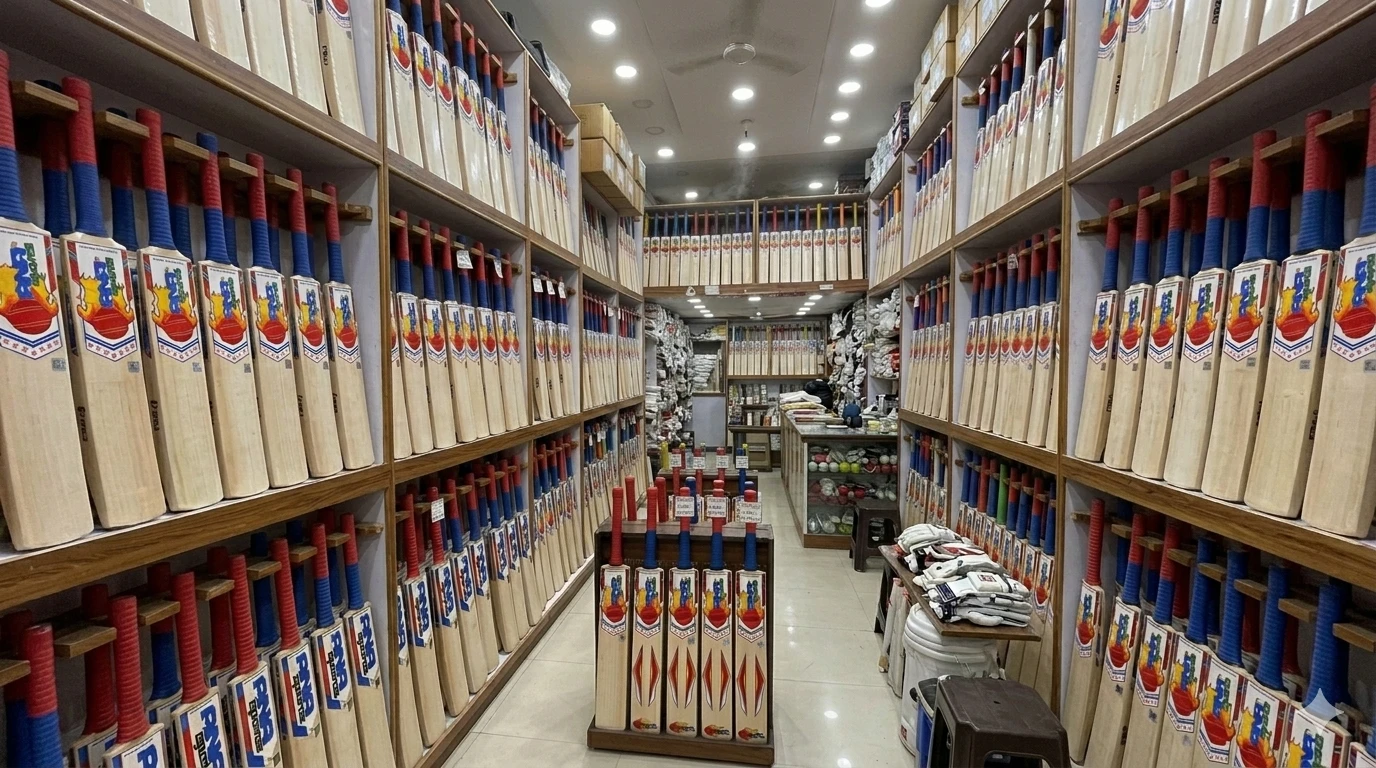
Types of Cricket Bats: Complete Guide for Every Player
Picking the right cricket bat can completely change how you play. Whether you are a beginner buying your first bat or a seasoned club player upgrading your gear, understanding the types of cricket bats helps you make a smarter choice. The wrong bat can hurt your timing, reduce your power, and even cause wrist strain over long innings.
Cricket bats are classified based on material, willow grade, sweet spot position, playing style, match format, and size. Each category serves a different kind of player and pitch condition. This complete guide breaks down all the different types of cricket bats so you can find the one that suits your game perfectly.
What Are the Different Types of Cricket Bats?
Before diving deep, here is a quick overview of how cricket bats are categorised:
-
Based on the material (type of willow used)
-
Based on grade (quality level of the willow)
-
Based on shape and the sweet spot position
-
Based on playing style
-
Based on the match format
-
Based on size and weight
Each classification answers a specific need. Understanding them all together gives you the full picture. One of the biggest decisions for most buyers is choosing between English vs Kashmir willow, as both materials suit very different playing levels and budgets.
Types of Cricket Bats Based on Material
1. English Willow Cricket Bats
English willow bats are crafted from Salix Alba Caerulea, a specially cultivated willow tree grown primarily across England. The wood carries a natural fibrous grain structure that absorbs impact brilliantly and transfers energy back into the ball efficiently. Anyone serious about their game will tell you that English willow cricket bats are simply in a different league when it comes to feel and performance.
- Best for: Serious club players, state-level cricketers, and professionals playing competitive leather ball cricket
- Key Feature: Lightweight yet powerful with a superior grain structure. This is exactly why the best English willow cricket bat for leather ball cricket consistently outperforms every other material at the competitive level.
- Sweet Spot: Precise and responsive across the entire blade, giving you that satisfying ping whether you are driving on the front foot or cutting off the back.
- Performance Level: Professional and competitive standard. Anyone searching for the best English willow cricket bat for club cricket in India will find no better material than this.
- Maintenance: Regular oiling, knocking in, and toe guard protection are needed. A well-maintained Grade 1 English willow cricket bat easily lasts two to three competitive seasons with proper care.
- Price Range: ₹5,000 to ₹80,000 depending on grade. For the best English willow cricket bat under 5000 in India, Grade 4 and Grade 5 options offer outstanding value.
2. Kashmir Willow Cricket Bats
Kashmir willow bats are made from willow trees grown right here in the Kashmir valley of India. The wood is naturally denser and harder than English willow, which makes these bats tougher and more durable, though they do sit a little heavier in the hand. For school players, beginners, and anyone looking for the ideal Cricket bat for Beginners without overspending, Kashmir willow cricket bats remain the most practical and popular choice across India.
- Best for: School players, beginners, and budget-conscious buyers who want durability and value together
- Key Feature: Tough, durable, and affordable for regular practice and beginner match use. Anyone asking about the best Kashmir willow cricket bat for beginners in India will find that this wood handles daily use better than most expect.
- Sweet Spot: Decent and reliable, though not as responsive as English willow. For a beginner still developing technique, the Kashmir willow cricket bat sweet spot is more than enough to build confidence and timing.
- Performance Level: Beginner to intermediate standard. When comparing Kashmir willow vs English willow cricket bats for practice, Kashmir willow is the smarter and more practical choice for net sessions.
- Maintenance: Less demanding than English willow, though occasional oiling keeps the wood healthy. A well-maintained Kashmir willow cricket bat for leather ball handles a full season of school and club cricket comfortably.
- Price Range: ₹ 1,500 to ₹6,500, depending on brand and quality.
3. Tennis Cricket Bats
Tennis ball cricket has its own culture across every street, colony, and ground in India, and these bats are built specifically for that game. Usually made from cheaper willow or poplar wood, they feature extra-thick edges, a wide, flat blade, and a lighter overall build that makes clearing boundaries much easier with little technique. If you are playing a gully match or a box cricket tournament, a tennis ball cricket bat is exactly what you need.
- Best for: Street cricket, gully matches, box cricket tournaments, and casual friendly games
- Key Feature: Extra-thick profile and lightweight design built for easy power hitting. The best tennis ball cricket bat for gully cricket in India always carries this wide, flat blade that helps casual players hit big without much effort.
- Sweet Spot: Wide and flat across the blade to maximise hitting area. A heavy tennis ball cricket bat with thick edges spreads the sweet spot generously for casual players.
- Performance Level: Recreational and casual play only. For anyone curious about the differences between a tennis ball, a cricket bat, and a leather ball, the construction and wood density are completely different.
- Maintenance: Minimal care needed. A lightweight tennis ball cricket bat for street cricket does not need oiling or knocking in, though storing it properly extends its life through many gully cricket seasons.
- Price Range: ₹500 to ₹3,500 depending on size and brand. For the best affordable tennis ball cricket bat for box cricket in India, plenty of reliable options sit comfortably within this range.
Types of Cricket Bats Based on Willow Grades
1. Grade 1+ Cricket Bats
If you walk into any professional dressing room, chances are the bats you see are Grade 1+. Handpicked from the top 5% of clefts, the face is flawless, there is no discolouration anywhere and the ping you get off the middle is something else entirely. Very little knocking in is needed before you can take it out to the middle.
- Grain Quality: 8 to 12 perfectly straight grains running clean from top to bottom, the kind of consistency you simply cannot find in any lower grade
- Appearance: Completely flawless white face with zero blemishes or discolouration anywhere on the blade
- Performance Level: International and elite professional standard, built for players who cannot afford anything less than the absolute best
- Price Range: ₹25,000 and go upto 80,000+
- Best For: Professional cricketers, state-level players, and anyone competing at the highest levels of the game
2. Grade 1 Cricket Bats
Grade 1 bats sit just below the absolute best, but in real match conditions, very few players would honestly notice the difference. Pickup feels natural, the bat moves well through the air, and it holds together nicely across a long and demanding season.
- Grain Quality: 6 to 10 mostly straight grains with excellent consistency throughout the blade
- Appearance: Mostly clean face with possibly a tiny speck or two on the edges, the playing surface stays completely clear
- Performance Level: Top competitive standard, genuinely close to Grade 1+ in actual match conditions
- Price Range: ₹20,000 and go upto 60,000+
- Best For: Serious club cricketers, district-level and state level competitive players
3. Grade 2 Cricket Bats
Ask any experienced cricketer where the real value lies, and most will point straight at Grade 2. Out in the middle, this bat plays almost identically to a Grade 1 at nearly half the price. Academy players and serious club cricketers come back to this grade repeatedly and for very good reason.
- Grain Quality: 5 to 8 mostly straight grains, occasionally a slight touch of redwood creeping in toward the edges
- Appearance: Clean face with minor blemishes possible, overall presentation remains very good
- Performance Level: Excellent and near professional standard, the smartest buy in the entire market
- Price Range: ₹8,000 and go upto 30,000+
- Best For: Academy cricketers, serious club players, and anyone who wants professional-level performance without the professional-level price tag
4. Grade 3 Cricket Bats
Walk into any sports shop across India, and Grade 3 is what most people walk out with. A lot of buyers get nervous seeing butterfly stains or small knots on the blade, but they are completely natural and have absolutely no bearing on how the bat performs. Knock it in properly, oil it regularly, and this bat punches well above its price tag.
- Grain Quality: 4 to 6 grains that occasionally run a little unevenly, perfectly normal at this grade
- Appearance: Butterfly stains and small knots appear naturally on the blade, cosmetic only and not a sign of any defect
- Performance Level: Solid and reliable for both matches and regular practice sessions
- Price Range: ₹3,500 to ₹15,000
- Best For: School cricketers, developing players, and anyone playing weekend league or casual club cricket
5. Grade 4 Cricket Bats
Grade 4 gets overlooked far more than it deserves. That butterfly stain wood is genuinely tough and handles repeated impact surprisingly well. For a beginner still figuring out footwork and shot selection or someone who practically lives in the nets, this grade makes complete and total sense. Many players also prefer using a dedicated Practice Cricket Bat during long net sessions to reduce wear on their primary match bat.
- Grain Quality: 3 to 5 grains with some natural irregularity, dense and durable wood throughout
- Appearance: Visible butterfly stains and blemishes across the blade, all completely natural and not a quality concern
- Performance Level: Reliable and dependable for daily practice and beginner match play
- Price Range: ₹2,500 to ₹6,500
- Best For: Beginners, school players and anyone who spends serious time in the nets and needs a bat that holds up
6. Grade 5 Cricket Bats
Grade 5 is where most people first fall in love with cricket. The willow is young and naturally dense, and none of the visual irregularities matter much when you are just starting out and spending hours working on your game. Keep it oiled, give it a decent knock in, and this bat handles everything you throw at it without complaint.
- Grain Quality: 3 to 5 grains, often wavy or irregular, young, and naturally dense wood
- Appearance: Multiple blemishes and colour variations across the blade, all signs of natural, young willow and nothing more
- Performance Level: Well-suited for net practice, coaching sessions and casual matches
- Price Range: ₹1,500 to ₹4,500
- Best For: Complete beginners, first-time buyers, and players logging heavy net sessions on a tight budget
Types of Cricket Bats Based on Shape and Sweet Spot
Most people focus on brand or price when buying a bat, but understanding the types of cricket bats based on shape and sweet spot position matters just as much. The sweet spot is simply the area on the blade where the ball feels best on contact, giving you more power without needing to hit harder. Where that spot sits quietly determines whether the bat suits your natural game or works against it.
1. Low Sweet Spot Bats
The sweet spot on these bats sits closer to the toe of the blade. When you are driving through the line on a fuller delivery, that is exactly where the ball meets the bat, and the result feels effortless. Front foot players who love cover drives and straight drives tend to get on very well with this profile. On the slow, low pitches extremely common across types of cricket bats in India and the subcontinent generally, this shape fits the way the game is naturally played here.
2. Mid Sweet Spot Bats
This is the shape that works for the largest number of players, and it is not hard to understand why. Among all the different types of cricket bats available today, the mid sweet spot sits right in the centre of the blade without pulling too strongly toward the front foot or the back foot.
Varied surfaces, different formats, mixed batting styles, this bat handles all of it without asking you to change your game around it. For anyone unsure about which profile to pick, a mid-sweet spot is almost always the right starting point.
3. High Sweet Spot Bats
These bats are made for players who enjoy getting on the back foot and taking the attack to the bowler. When you look across all types of cricket bats available in the market, high sweet spot profiles stand out specifically for players who face short-pitched bowling regularly.
The sweet spot sits higher up near the shoulder, which means pull shots, cut shots and hooks off a hard length feel clean and powerful. If bouncy surfaces are where you play most of your cricket, this bat will suit your game well.
Types of Cricket Bats Based on Playing Style
1. Power Hitting Bats
These bats have thick edges, a heavier profile, and a large flat hitting area. Every design detail is focused on maximising hitting distance.
- Best For: Aggressive batters who love to clear the boundary, big hitters in T20 and box cricket formats
2. Control Bats
Control bats are slimmer with thinner edges and a more pronounced spine. They prioritise timing and placement over raw power.
- Best For: Technical players who rely on placement, timing, and running between wickets rather than aerial hitting
3. All-Rounder Bats
These bats balance both power and control with medium-thick edges and a well-distributed weight profile. Most high-quality Grade 1 and Grade 2 bats fall in this category.
- Best For: Players who switch between formats and need one reliable bat for all conditions
Types of Cricket Bats Based on Match Format
1. T20 Cricket Bats
T20 bats are built for aggression. They feature thick edges, often 40mm or more, a high or mid sweet spot, and a heavier bottom to maximize hitting power in the shortest format of the game.
2. Test Cricket Bats
Test bats are designed for long innings, consistency, and control. They are lighter and balanced, allowing the batter to play for hours without fatigue. The sweet spot is usually in the mid- to low-range.
3. Tennis Ball Cricket Bats
Specially made for casual cricket, these bats have extra-thick flat blades with no concaving. The lightweight, big-hitting surface makes them perfect for tape-ball and rubber-ball matches.
Types of Cricket Bats Based on Size and Weight
1. Junior Cricket Bats
Available in sizes 1 through 6 and Harrow, junior bats are scaled down for younger players. Size selection should match the player's height to ensure correct technique development.
2. Adult Cricket Bats
Full-size or Size 6 bats are for players aged 15 and above. They come in short-handle, long-handle, and long-blade variations based on the batter's height and preference.
3. Lightweight vs Heavy Bats
Lightweight Bats: Bats under 1.1 kg offer better bat speed, easier manoeuvrability, and are ideal for beginners, women cricketers, and players who rely on timing over muscle.
Heavy Bats: Bats above 1.2 kg are preferred by power hitters who can generate their own bat speed through strength. They hit harder but require more physical stamina and technique to use well.
How to Choose the Right Cricket Bat
1. Skill Level: Beginners should start with Kashmir willow Grade 3 or 4. Advanced players should invest in English willow Grade 1 or Grade 2.
2. Playing Style: Power hitters need thick edges and heavy profiles. Technical players need balanced, lighter bats.
3. Pitch Conditions: Slow, turning pitches call for a low sweet spot. Bouncy, hard tracks need a high sweet spot.
4. Bat Weight and Pickup: Always pick up the bat and feel its balance. A bat that feels heavy in your hand will slow your swing regardless of its actual weight.
5. Budget: Kashmir willow offers great value under ₹4,000. English willow Grade 2 is the sweet spot for players spending ₹8,000 to ₹30,000+.
If you still feel unsure after understanding the various bat categories, this complete bat selection guide can help simplify the decision further.
Cricket Bat Types Comparison Table
|
Category |
Type |
Best For |
Key Benefit |
|
Material |
English Willow |
Professionals |
High performance |
|
Material |
Kashmir Willow |
Beginners |
Affordable |
|
Grade |
Grade 1+ |
Professionals |
Top quality |
|
Grade |
Grade 2 |
Club players |
Balanced |
|
Grade |
Grade 5 |
Beginners |
Budget |
|
Sweet Spot |
Low |
Front-foot players |
Slow pitches |
|
Sweet Spot |
High |
Back-foot players |
Bouncy pitches |
|
Playing Style |
Power Bat |
Aggressive |
Big hitting |
|
Playing Style |
Control Bat |
Technical |
Precision |
|
Format |
T20 Bat |
Short format |
Power |
|
Format |
Test Bat |
Long format |
Control |
|
Weight |
Lightweight |
Beginners |
Easy handling |
|
Weight |
Heavy |
Power hitters |
Strength |
Common Mistakes to Avoid
-
Choosing based on looks only: A shiny finish or a famous brand logo does not equal performance. Always check the willow grade and grain count. Understanding cricket bat wood quality helps you judge durability, ping, and long-term performance far more accurately than appearance alone.
-
Ignoring weight and balance: A bat that is too heavy will slow your swing and affect timing, especially for younger or lighter players.
-
Picking the wrong size: Using an adult bat when a junior size is needed causes poor technique and reduces shot quality.
-
Not considering playing style: A power bat given to a control player, or vice versa, will limit your natural strengths rather than enhance them.
Frequently Asked Questions
1. Which type of wood is used to make cricket bats?
Cricket bats are made from willow wood. English willow is what most professional players use, while Kashmir willow is popular among beginners looking for a budget-friendly option.
2. Which type of cricket bat is best?
Honestly, it comes down to your level. Competitive players do well with Grade 1 or Grade 2 English willow, while beginners get solid value from Kashmir willow bats.
3. What is the difference between English willow and Kashmir willow bats?
English willow feels lighter and plays better off the blade. Kashmir willow is heavier and tougher, but costs far less, making it a practical choice for casual players.
4. Which cricket bat is best for beginners?
A Kashmir willow bat in Grade 3 or Grade 4 is a smart starting point. It handles regular use well, costs reasonable money, and helps you build the basics properly.
5. What weight of cricket bat should I choose?
Most adult players are comfortable between 1.1 kg and 1.3 kg. Younger or newer players tend to manage better with something closer to 1.0 kg for easier handling.
6. What is a sweet spot in a cricket bat?
The sweet spot is where the ball feels best on contact, giving you more power and less sting. Where it sits tells you how the bat plays on different shot types.
7. What size cricket bat should I use?
Your height decides this. Shorter players under 4'3" need smaller sizes, while anyone standing above 5'6" can comfortably play with a standard full-size adult bat.
8. Are expensive cricket bats always better?
Not really. A top-grade bat helps only if your game demands it. Buying an expensive bat before developing proper technique is honestly just a waste of good money. What matters more is the overall cricket bat quality process, including willow preparation, pressing, balance, and finishing standards.




Related Blog
English Willow vs. Kashmir Willow: Choosing the Right Cricket Bat for Your Game
Nov 13, 2025 by Admin
ANA Sports