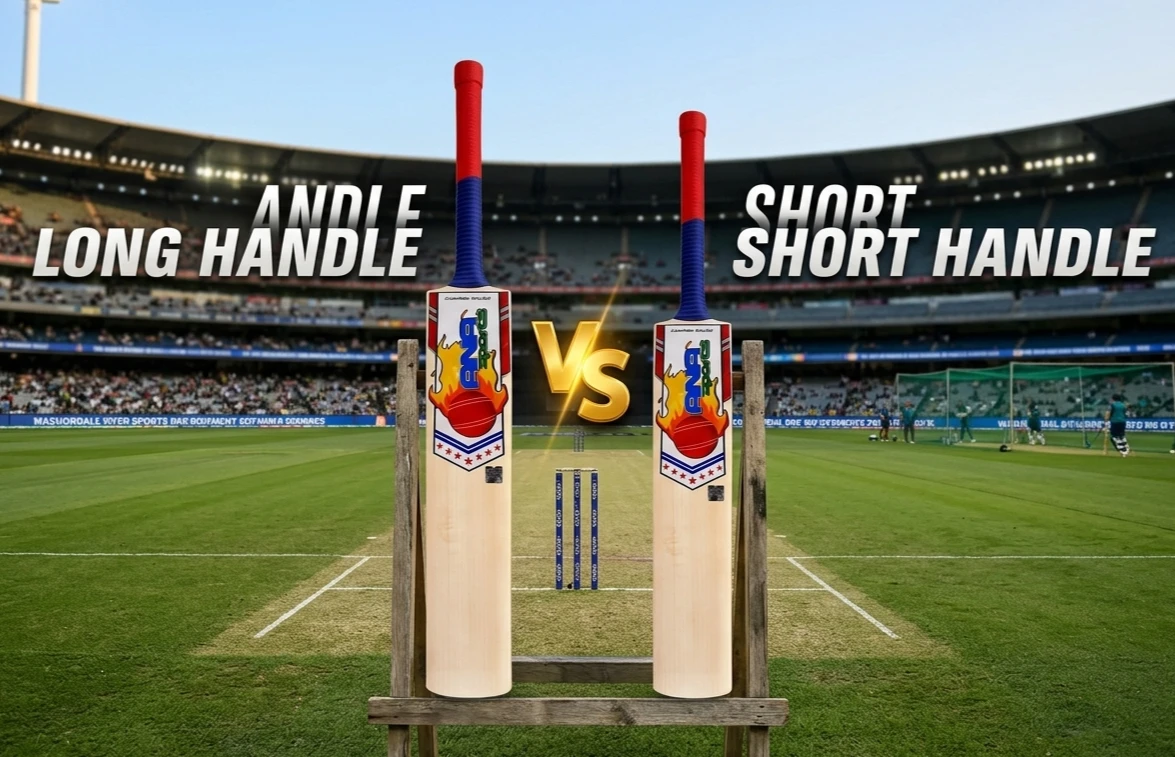
Long Handle vs Short Handle Cricket Bat: Key Differences Explained
Walk into any cricket equipment store, and you will find batters agonising over willow grade, blade thickness, and pickup weight. Rarely does anyone stop to ask: “Wait, is this the right handle length for me?”
And yet, handle length is one of those silent variables that shape everything about how a bat feels and performs. Too short for your frame, and you are constantly fighting for space at the crease. The right fit and every shot feels cleaner, more controlled, and more natural than you expected.
The distinction between a long handle and a short handle cricket bat comes down to roughly half an inch to one inch of extra grip length. But that small difference can have a big impact on your stance, your shot-making, and your overall comfort at the crease, particularly if you are on the taller side or have a naturally low grip.
This guide covers everything you need to make the right call: what each handle type actually is, who it suits, how it affects your technique, and the mistakes most buyers make when they overlook this detail entirely.
Why Handle Length Actually Matters
Picture this: You are at the crease, eyes on the ball, ready to drive. But something feels slightly off. Your bottom hand is crowding the splice. Your backlift feels cramped. And that front-foot drive, the one you have rehearsed a hundred times, just does not click the way it should.
Nine times out of ten, nobody blames the handle. They blame technique, timing, or nerves.
But here is the truth most cricket equipment guides skip entirely: the wrong handle length can silently sabotage your batting mechanics. It is one of the most overlooked aspects of bat selection, and one of the easiest to fix.
Whether you are buying your first serious bat or upgrading to something more refined, understanding the difference between a long handle and short handle cricket bat is not optional. It is fundamental. Alongside handle size, understanding English vs Kashmir willow is another key part of choosing the right bat for your game.
Let us break it down properly.
What Is a Short Handle Cricket Bat?
A short handle (SH) cricket bat is the standard size used by the vast majority of adult cricketers worldwide. It is the default handle specification you will find on virtually every professional-grade bat. Before choosing between handle sizes, it also helps to understand the broader Types of Cricket Bats available and how each suits different playing styles.
Key measurements:-
-
Handle length: approximately 10 to 10.5 inches
-
Total bat length: up to 33.5 inches (MCC regulation maximum)
-
Designed for players: 5’4” to 6’1” in height (roughly)
The short handle offers a compact, controlled feel. It keeps your hands closer to the blade’s sweet zone, which improves bat speed and punch through the ball. For most adult batters, this is the ideal and most natural configuration. For newer players, a short handle is usually the safest and most versatile option when choosing a Cricket bat for Beginners.
What Is a Long Handle Cricket Bat?
A long handle (LH) cricket bat extends the grip section by approximately half an inch to an inch compared to a short handle. This seemingly minor tweak has a surprisingly significant impact on how the bat plays and feels.
Key measurements:-
-
Handle length: approximately 10.5 to 11 inches
-
Total bat length: up to 34.5 inches (within the MCC’s extended allowance for taller players)
-
Designed for players: 6’1” and above
The long handle gives taller batters more room between their hands and the pitch of the ball. It allows a more natural stance, a fuller extension through the drive, and reduces the hunching or cramping that occurs when a tall player uses a bat that is simply too short for their frame. Still figuring out the basics of what to look for? Our bat selection guide walks you through every key decision from scratch.
Short Handle vs Long Handle: Side-by-Side Comparison
|
Feature |
Short Handle (SH) |
Long Handle (LH) |
|
Handle Length |
~10 to 10.5 inches |
~10.5 to 11 inches |
|
Total Bat Length |
Up to 33.5 inches |
Up to 34.5 inches |
|
Best For |
Heights up to ~6’1” |
Heights 6’1” and above |
|
Blade Sweet Spot |
Standard position |
Slightly lower relative to grip |
|
Bat Weight Feel |
True to weight |
Can feel slightly heavier |
|
Availability |
Universal |
Less common; specialist retailers |
|
Control |
Higher |
Slightly lower for shorter players |
|
Power |
Standard |
Greater reach and leverage |
The key insight most guides miss: The difference is not purely about height. It is also about arm length and how low you grip the bat. A tall player with longer arms may prefer a short handle for its compactness. A player with a long body but shorter arms may benefit enormously from a long handle. Always factor in your arm-to-torso ratio.
Who Should Use a Long Handle Bat?
A long handle bat is not a luxury upgrade. It is a biomechanical necessity for certain body types. You should seriously consider a long handle if:
-
You are 6’1” or taller and regularly feel cramped at the crease
-
Your bottom hand keeps sliding down the handle beyond the splice during drives
-
You struggle with front-foot drives and the bat seems to dig into the ground before full extension
-
Your backlift feels restricted and you cannot get a full, natural arc
-
You play a lot of front-foot cricket as long handles suit players who move forward aggressively
-
You are a junior transitioning to adult cricket as taller juniors often find long handles bridge the gap between senior and junior bat sizes more comfortably. Our Junior and Youth Bats range is worth exploring before making that move up.
Who Should Use a Short Handle Bat?
Short handle bats are the gold standard for a reason. Consider a short handle if:
-
You are under 6’1” with a standard arm length
-
You play predominantly on the back foot as rear-foot players typically favour the compactness of SH
-
You are a top-order batter prioritising control and precision over raw reach
-
You want maximum bat speed as the slightly shorter lever generates quicker swing through the ball
-
You are unsure which to choose as the short handle is the universal standard for good reason
How Handle Length Affects Your Batting Technique
This is the section most guides completely ignore, and it is arguably the most important.
1. Front-Foot Drives
A long handle gives you the extra reach to get fully behind the ball on full-length deliveries. Tall players using a short handle often have to over-extend their wrists to make proper contact, creating inconsistency in the drive and reducing power transfer.
2. Pull and Hook Shots
For pull shots, handle length is less critical. What matters more is the pickup weight. However, a long handle can make the bat feel slightly heavier at the top of the swing, which some power hitters prefer for momentum through the shot.
3. Defence and Leave
Short handles typically provide better feel and responsiveness in the hands, vital for tight defensive play. Elite Test batters almost universally use short handles for this reason.
4. Running Between Wickets
This sounds trivial, but it is not. A longer bat can subtly affect how you carry and drag it while turning for runs. Short handle bats are marginally easier to control in tight run situations.
The Grip Factor: How You Hold the Bat Changes Everything
Here is something almost no bat guide discusses: two players of identical height can need different handle lengths based on how they grip the bat.
-
High grip players (hands near the top of the handle) generally suit a short handle as their hands already sit in the optimal zone.
-
Low grip players (hands positioned lower, closer to the splice) often benefit from a long handle because it gives more usable handle length to work with.
If you habitually grip low on a short handle bat, you are essentially using the blade’s shoulder as part of your grip, which kills feel and control. A long handle solves this without forcing you to change your natural grip. Many players also experiment with grip positions during training sessions using a dedicated Practice Cricket Bat before switching to their match bat.
Common Mistakes When Choosing a Cricket Bat Handle
- Assuming it is just about height is a guide, not a rule. Always factor in arm length, grip position, and playing style.
- Not picking the bat up before buying. Always hold the bat in your natural batting stance before purchasing. If your bottom hand feels cramped or slides off, go longer.
- Buying long handle “for the extra reach” at average height, a 5’9” player using a long handle bat often loses bat speed and control without gaining meaningful reach. Do not over-correct.
- Ignoring the oval vs round handle distinction Beyond length, handles also vary between oval and round cross-sections. Oval handles suit players who want a natural grip orientation locked in; round handles allow more flexible wrist movement. This is a separate but equally important consideration.
- Assuming all manufacturers measure the same There is no universal industry standard for exactly where the blade ends and handle begins. A “long handle” from one brand may measure slightly differently from another. Always check total bat length, not just the handle specification.
Quick Decision Guide: Which Handle Is For You?
Answer these three questions:
1. What is your height? - Under 5’4” – Junior bat sizes - 5’4” to 6’0” – Short Handle - 6’1” and above – Long Handle (or short handle if you play predominantly back foot)
2. Where do your hands naturally sit on the handle? - Near the top – Short Handle - Mid to lower – Long Handle
3. What is your dominant style of play? - Front-foot, aggressive, tall – Long Handle - Back-foot, technical, standard height – Short Handle
If two of three answers point in the same direction, that is your bat.
Find the Handle That Fits Your Game
Choosing the right handle length is one of those decisions that seems small until you get it right and then you wonder how you ever batted without it. It is not about copying your favourite player or picking the longest bat on the shelf. It is about understanding your height, your grip, and your style, and letting those facts guide you to the correct fit.
Here is the simplest way to think about it: if you are under 6’1” with a standard grip, a short handle will almost certainly serve you better. If you are tall, front-footed, or find yourself constantly gripping lower than you should, a long handle could genuinely unlock a better version of your batting.
The bat you use should work for you, not against you. And that starts with getting the handle right, as handle length matters, but so does cricket bat wood quality, as the willow directly impacts pickup, durability, and shot response.
At Ana Sports, every bat in our range is built with these distinctions in mind, backed by a rigorous cricket bat quality process that ensures consistency in balance, pickup, and performance. because we believe the right equipment does not just feel good in your hands. It makes you bat better. Choosing the correct handle length becomes even more important when using a high-end Performance Cricket bat built for match-level play.
Explore our full range of premium cricket bats at Ana Sports and find your perfect fit.
Frequently Asked Questions
1. Can a short player use a long handle cricket bat?
Technically yes, but it is not recommended. A player under 6’1” using a long handle will typically find the bat unwieldy, with the sweet spot sitting lower than their natural hitting zone. This reduces control and bat speed. Stick to short handle unless you have a specific reason, such as an unusually low grip style.
2. Is a long handle bat heavier than a short handle bat?
Not necessarily by weight on a scale as the blade weight remains the same. However, the longer handle shifts the balance point slightly, which can make the bat feel heavier during the swing. This is why some power hitters prefer it, but others find it tiring over long innings.
3. Do professional cricketers use long handle bats?
Yes. Many tall international batters use long handle bats. Players over 6’2” routinely opt for long handles to maintain proper technique. However, the majority of professional batters, even at 6’0”, use short handles due to the superior control they offer. You will notice similar bat setup preferences across modern T20 cricket as well, something explored in our IPL guide.
4. What is the difference between a long handle and a long blade cricket bat?
These are two different specifications. A long handle extends the grip section. A long blade (LB) extends the blade itself, increasing the overall bat length further and is designed for exceptionally tall players (6’4”+). Some bats combine both. Always check the spec sheet carefully.
5. How do I know if my current bat handle is too short for me?
Signs your handle is too short: your bottom hand regularly slides below the splice, you feel hunched at the crease, your front-foot drives feel cramped or your wrists roll prematurely, and the bat seems to “run out” before full extension on full deliveries. If two or more of these apply, try a long handle.
6. Does handle length affect the weight of the bat?
Yes, marginally. A longer handle adds a small amount of weight (a few grams), but more importantly, it changes the balance by shifting it slightly toward the top of the bat. Most players do not notice the weight difference but do notice the change in pickup feel.




Related Blog
English Willow vs. Kashmir Willow: Choosing the Right Cricket Bat for Your Game
Nov 13, 2025 by Admin
ANA Sports